Bringing a Dutch Cargo Bike to Fort McMurray

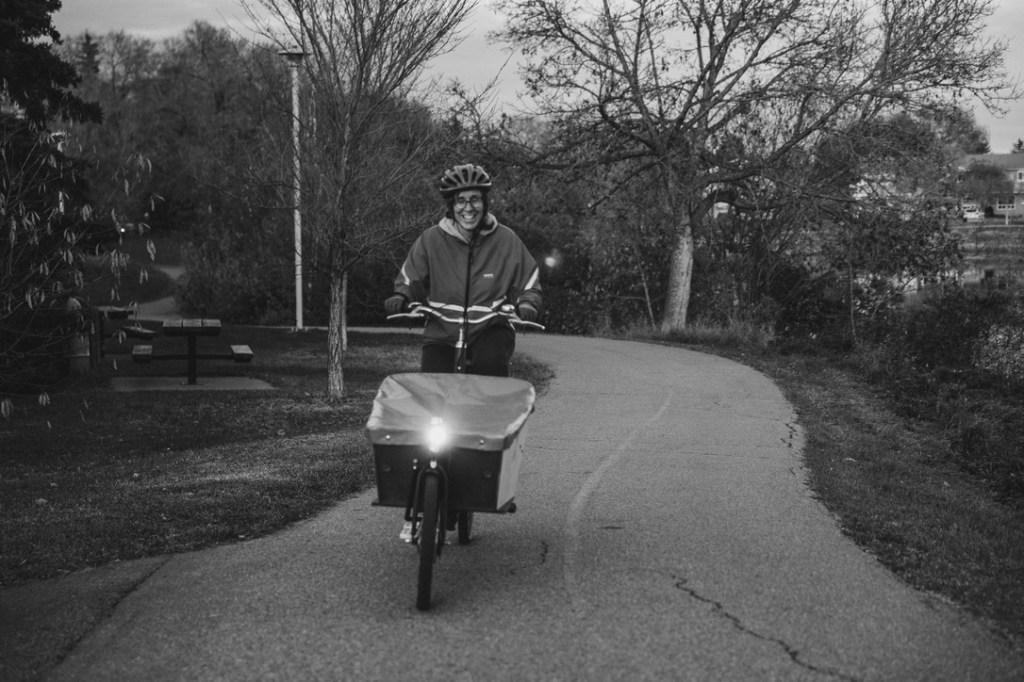
If I had to pin it down to one moment where it all clicked, it might be an evening in late October of 2021. A thick, almost icy haze had settled across uptown Fort McMurray creating an almost liminal space. The trailside tree canopy was illuminated in a deep orange glow from the street lamps and the only sound was the gentle whirr of bicycle tires on the pavement. I had been experimenting with commuting by bike on and off for a couple of years and had just purchased a capable and sturdy bicycle with electric assist to make a go of my first year of bike commuting year round. I’d had the fancy new bike for a couple weeks now and the truck hadn’t left the driveway. Not only was cycling for transportation, in the city famous for its oil sands, possible, but it was also a genuine joy. I was connecting with my city at a human pace, my body propelling me through it all, in a whole new way. The only question that lingered in my mind was, “How do I share this joy?”

I became a bike evangelist, sharing pictures of the view from the bike path on social media—vistas of the Athabasca River, tree-lined trails, and snow banks as high as my handlebars. I gushed about it to my friends in real life too. Yet despite my enthusiasm, it was hard to measure any changes around me. Where were the other cyclists? I had to believe that just the act of leaving the truck at home was an act of resistance but the message wasn’t sticking. And of course not; bike joy is something you have to experience to be converted.

After a little late-night googling, the picture started to come together. In Winnipeg, an art project called Plain Bicycle brought hundreds of second-hand Dutch bicycles to the Canadian city to create what they called a “culture bomb.” And it was working. As folks embraced the whimsy of the two-wheeled lifestyle, the culture started to change in their city. Around the same time, I picked up a copy of How to Do Nothing by Jenny Odell and learned about the concept of art in place. Instead of art just staying behind walls in a gallery, I read about incredible projects where art in the open air could generate conversations in the public sphere.

I also had a particular curiosity about a Dutch bike called a “bakfiets,” translated into English as a “box bike.” These long bikes with cargo boxes in front of the handlebars are used in the Netherlands to carry everything from deliveries to small children. The cargo box could be a canvas for a small-scale mural that would spark some joy on its own and take on a unique character as the bike was pedalled around town. It seemed like the right mix of utility and novelty to launch a joy-filled, covert, human-powered mission in Fort McMurray. Folks could borrow the cargo bike, experience the bike joy, and slowly but surely, we could push the needle toward a slower, kinder, and more reciprocal way of being within our community. We would name the project, “Borrow a Bakfiets.” But how would you find one, and how would you pay for it?

As it happens, there is a Dutch bicycle shop just four hours south in Edmonton, that recently imported brand new bakfietsen. They are beautiful machines designed to last a lifetime, and longer. We took one for a spin and put down a deposit. This could be it! At the same time, I put in an application for an Arts, Culture, and Heritage grant—a forward-thinking pilot by our municipality that allows folks who don’t fall into the nonprofit circle to take part in the Community Investment Program. Unfortunately, the grant approval took some time and the owner of the bike shop asks if he can sell the bakfiets on hold to another prospective buyer. Fortunately, he offers us his personal bakfiets instead. It’s well loved, having been the very bike his kids were raised in. And the price falls within the grant amount, meaning we won’t have to fundraise the shortfall to make the project a reality. By late summer our grant application was approved and the second-hand bakfiets arrived in Fort McMurray strapped into the back of a half-ton truck.

At once I began introducing it to the city I love: a post office trip by way of the Birchwood Trails, a stop to read a book under the trees and sunflowers of Helen Pacholko Park, a full cargo load full of apples from the church courtyard. The feeling was, as a Dutch person might say, “gezellig.”

The bike was easy and comfortable to ride, anyone could do it. It created opportunities for new connections through conversations and chance encounters. It was, frankly, a slow bike but the change of pace offered the very invitation that cycling first offered to me: the chance to reconnect with the land we live on under the power of my own two legs.
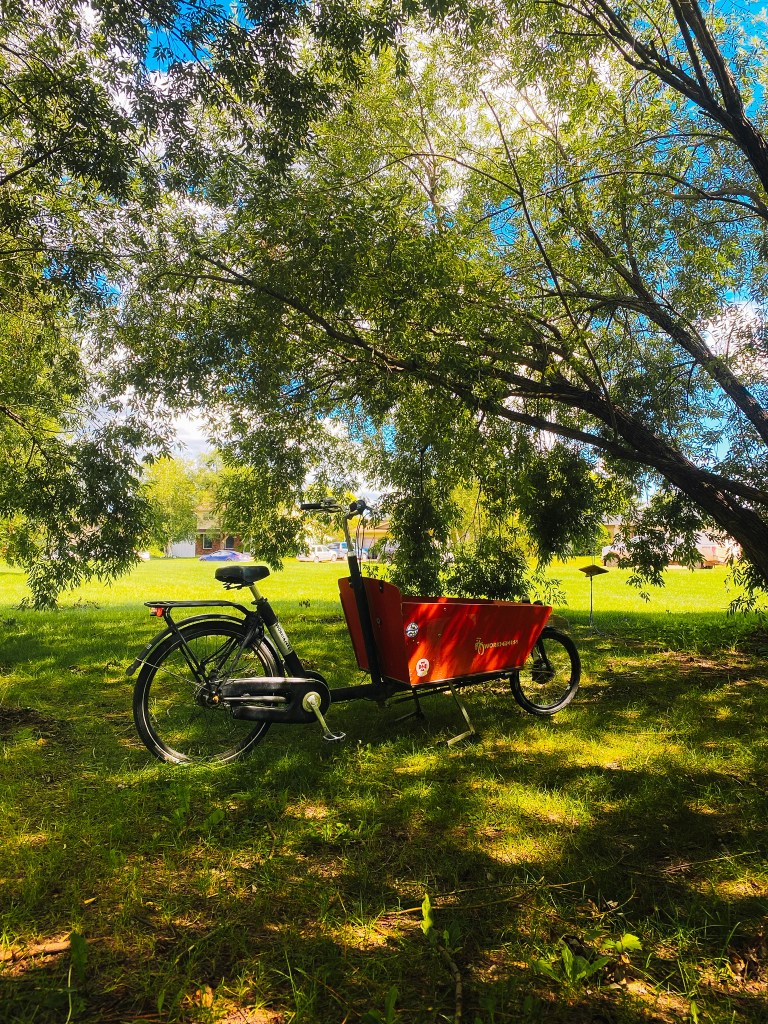
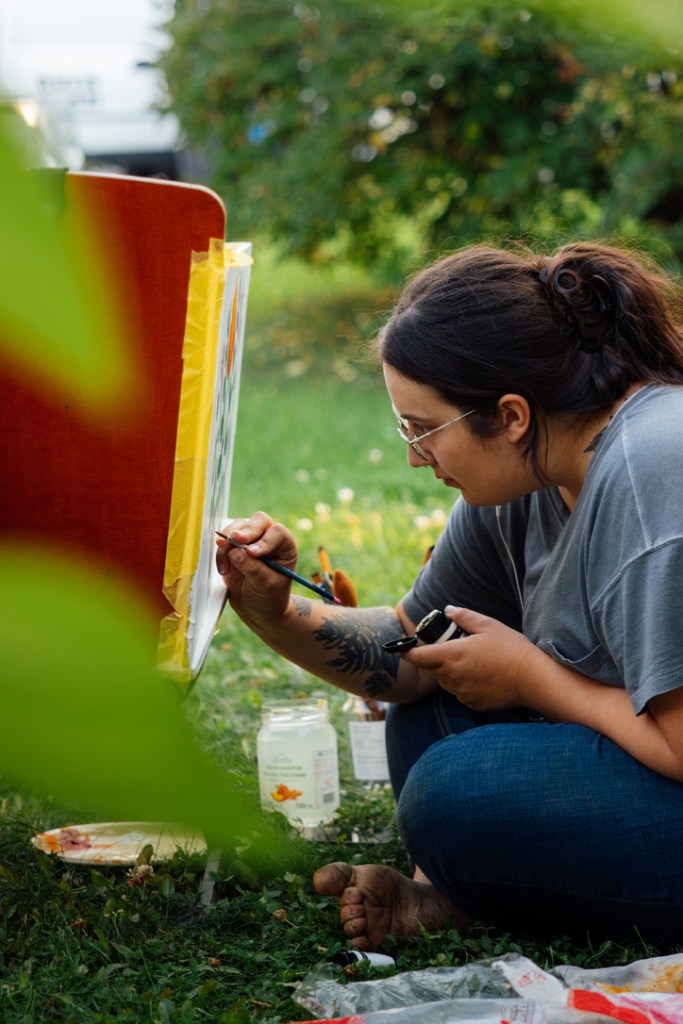
As the leaves of late August began to turn to colours of gold, my partner (and talented artist in her own right) Genoveve began translating her mural design to the cargo box. Her original design features some of our favourite local flora and fauna of the boreal forest, illustrated in a folk style reminiscent of Swedish and Dutch art.

These natural wonders illustrate what poet and naturalist Wendell Berry calls “the principle of return”—a way of living on this planet that requires responsibility and care, and calls for methods and economies of a different kind. Take fireweed, for instance, whose vibrant purple fields spring up to repair the soil where it has been disturbed, or bunchberry, a prolific creeping plant that spreads by rhizomes in the highly acidic soil of old spruce stands where things which are decaying give way to new life. It’s a call to celebration and recognition that the place we call home is valuable not for a resource we can take from it, but rather because of the beauty of the land itself. I think it’s high time we learned from the land, tempered our relentless rape of her resources, and started giving back to the place that has already given us so much.
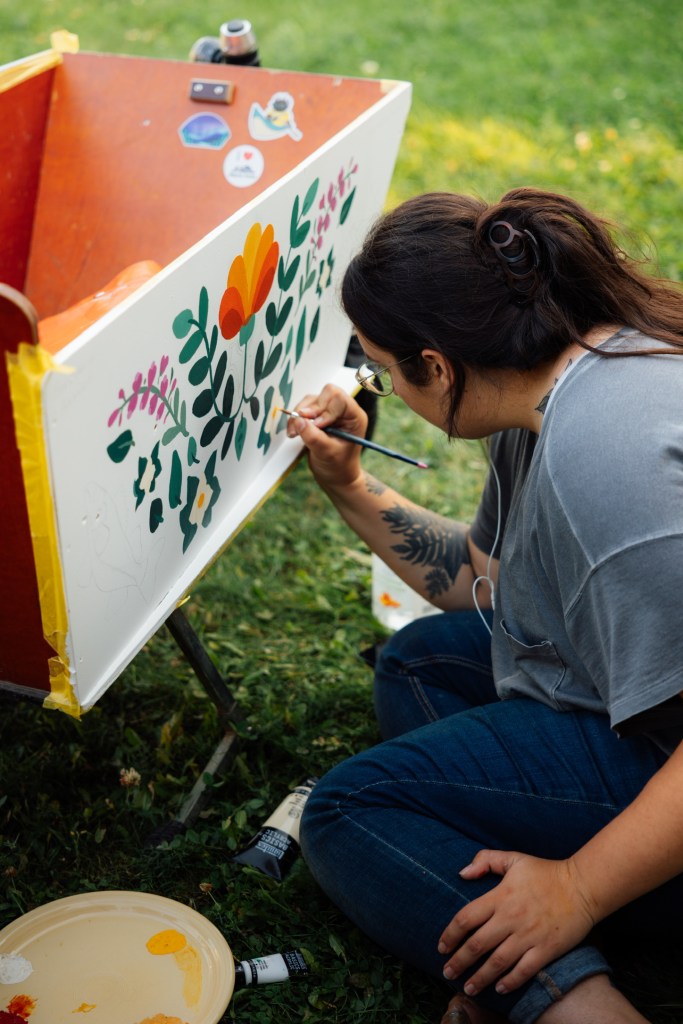
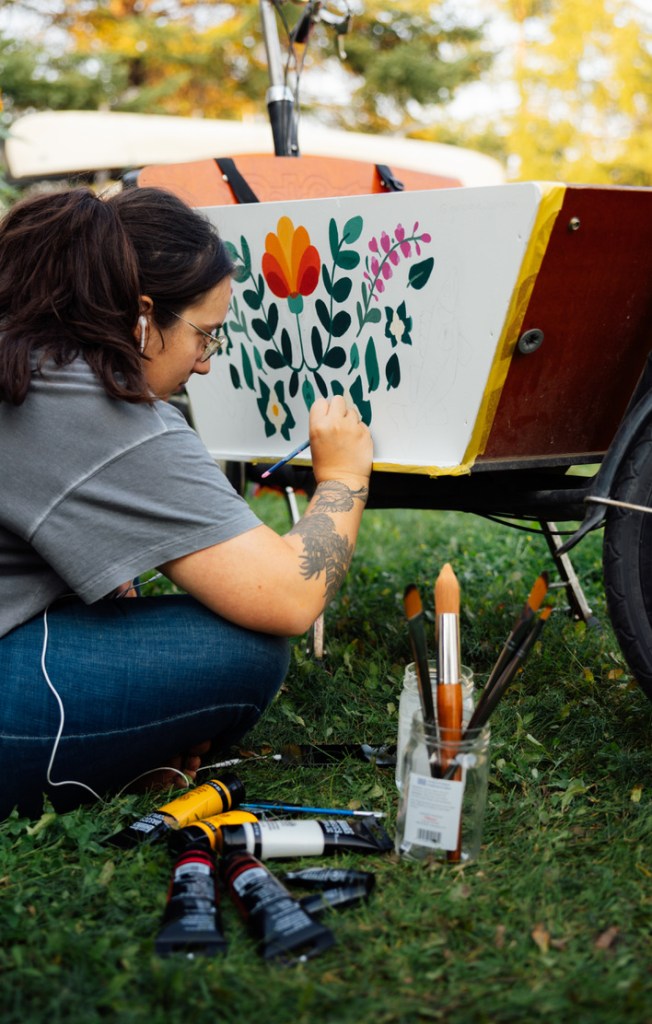
My love of the Dutch bicycle doesn’t just stem from aesthetics. For me, it is an avenue of reconnection with my heritage. My mother immigrated to Canada from the Netherlands with her family when she was two and I grew up with an Oma and Opa who passed on some of the culture to us. Although I struggle to understand the language I certainly enjoy the Dutch food! It was only fitting then, for the first person to Borrow the Bakfiets to be my mother. The Bakfiets was due to head south again.

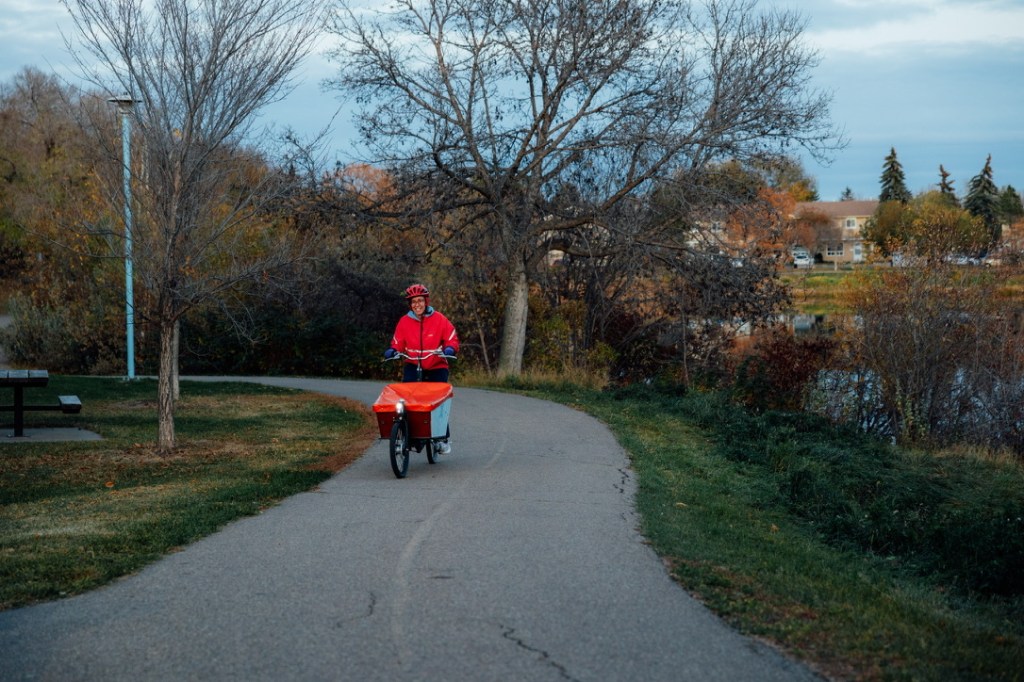
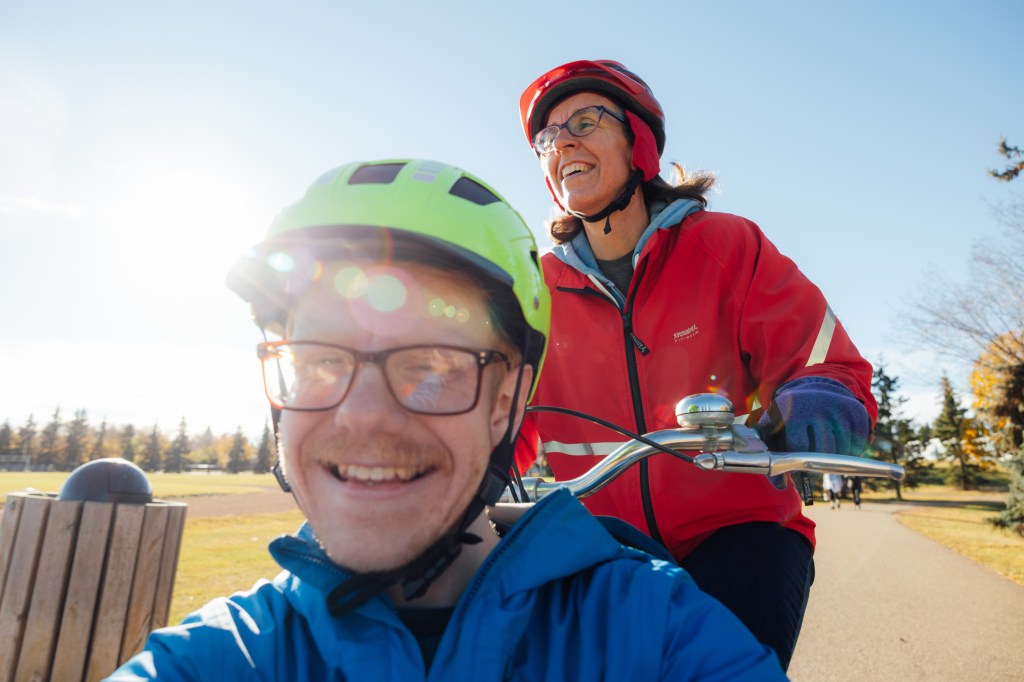
The warmth of the evening sun lit up the variegated grasses and trees, reflected in the still waters of Broadmoor Lake as my mother took her first pedal strokes on the Bakfiets. The air was crisp and the joy was palpable as we cycled through the park navigating around dog walkers and moms pushing strollers. One couple remarked as we passed, “Look, it’s just like in Amsterdam!” The next morning my mom gave me a ride and became the quintessential “bakfietsmoeder” the endearing Dutch equivalent of, and alternative to, the North American mom driving a massive SUV.
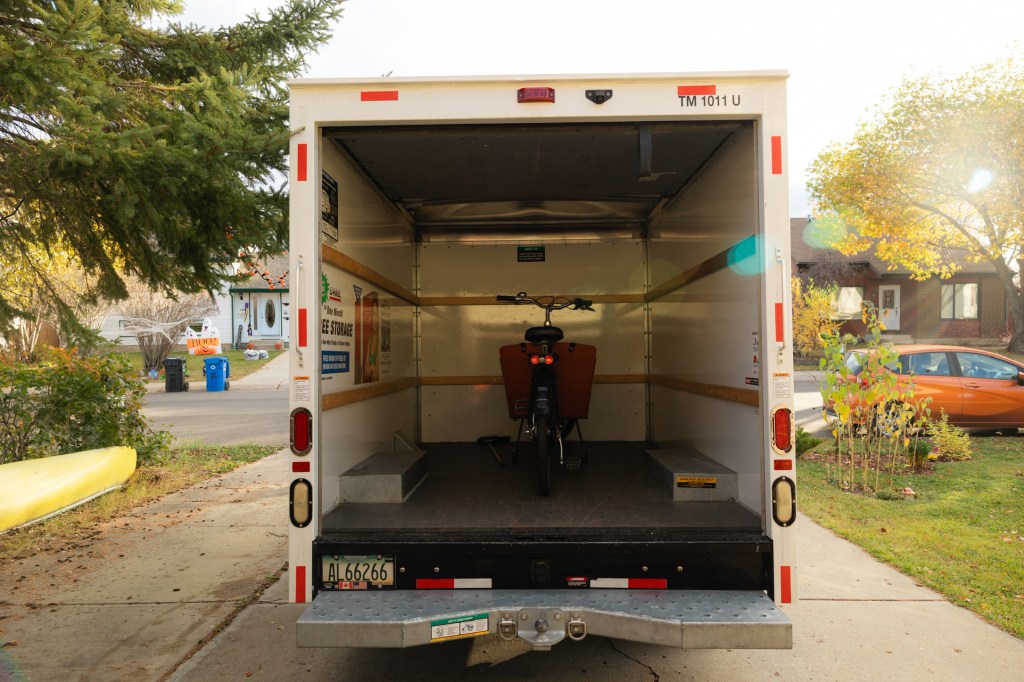
This same trip to Sherwood Park marked a change for me too—I sold my truck while I was there and rented a U-Haul for the return trip. Adding a cargo bike share to our transportation equation had proved, at least for me, that you really can live car-free in Fort McMurray.

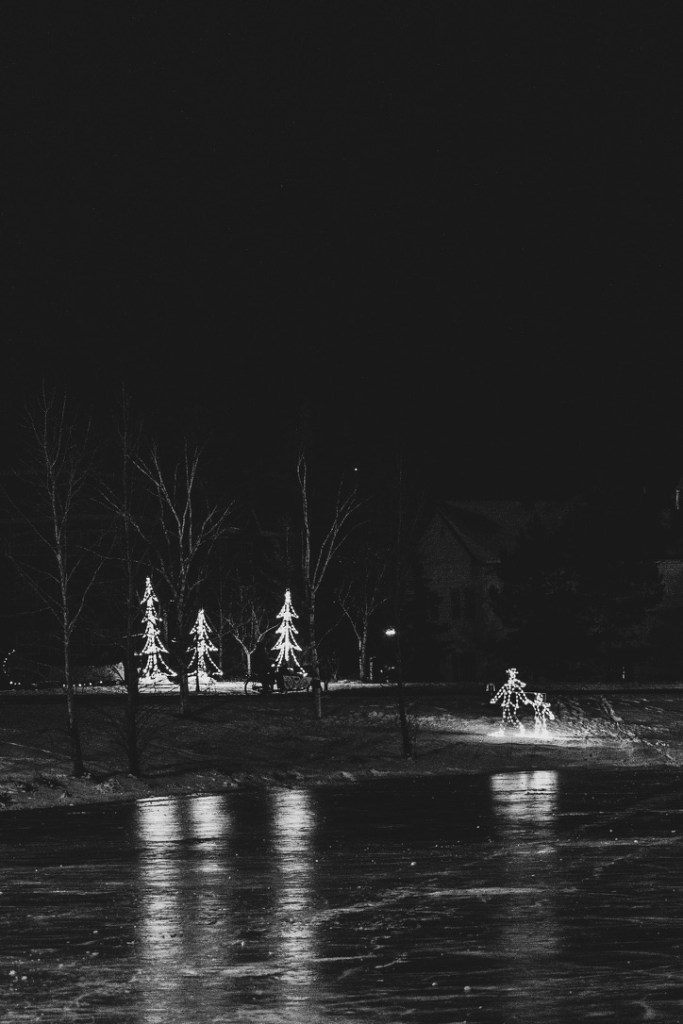
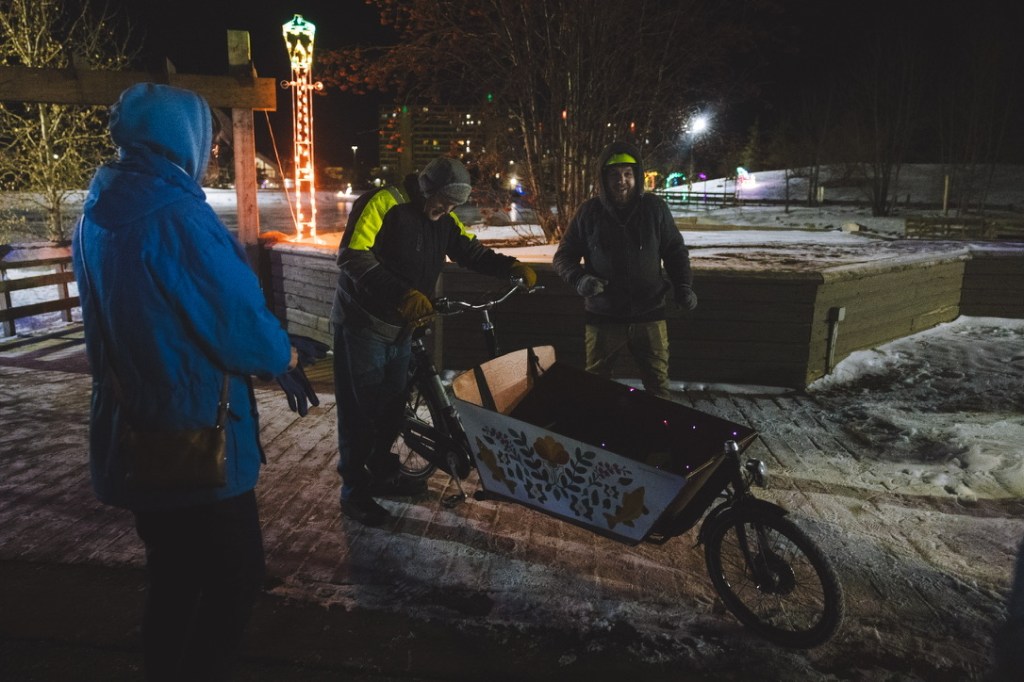
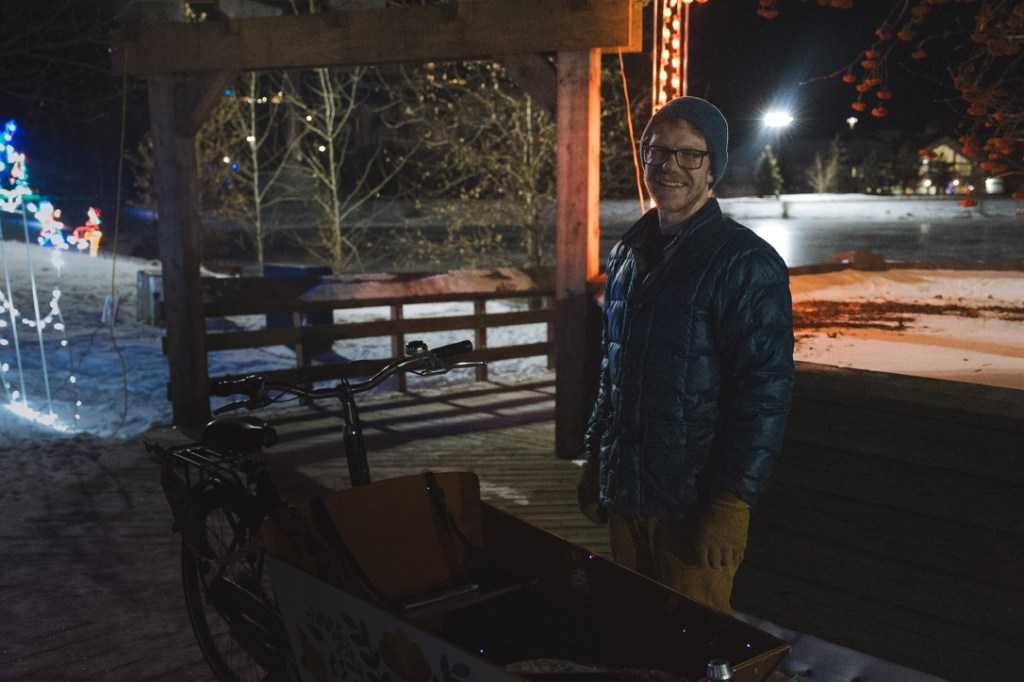
It’s now December and as snow begins to fall, interest in the project has slowed. On Boxing Day, gathered with friends and family, we officially launched the cargo bike share with a ribbon cutting, hot chocolate, and laps around the festively adorned park downtown. We still, of course, have a long way to go in transforming the culture in our northern city but I remain hopeful. We have generated some meaningful conversations and infused some joyful activism into our lives. I can’t wait to see what happens next. Let the borrowing begin!
To get involved or borrow the bakfiets, visit the project at https://borrowabakfiets.wordpress.com/.

Acknowledgements

Many hands have contributed to this project and for that I remain ever grateful. Thank you to Genoveve for your long suffering support and for capturing the artistic vision of the mural so beautifully, to Erin for your support and encouragement, to Matt at Normaal Bike Shop for selling us such a special bike and your patience as we secured funding, to Steph and Sky for your kindness, to Ma and Kat for your careful eyes and feedback on this essay, to the folks at the municipality who helped us with the grant submission, and to all the folks who offered feedback early in the project including the anonymous curmudgeon who suggested the best use for the bakfiets would be to “Toss… it into the Athabasca.”

Funding considerations for Borrow a Bakfiets (including this photo essay) were provided by the Regional Municipality of Wood Buffalo.

We acknowledge that we’re approaching this project from a place of privilege as settlers on Treaty 8 land and unceded Métis territory.

Further Reading

Christina Torres, Cyclista Zine (On bike joy joy and inter-sectional feminism)

Erin Riediger, Plain Bicycle (A podcast on the project in Winnipeg by the same name)

Jenny Odell, How to Do Nothing: Resisting the Attention Economy (On slowing down)

An early season portage trip in Alberta canoe country

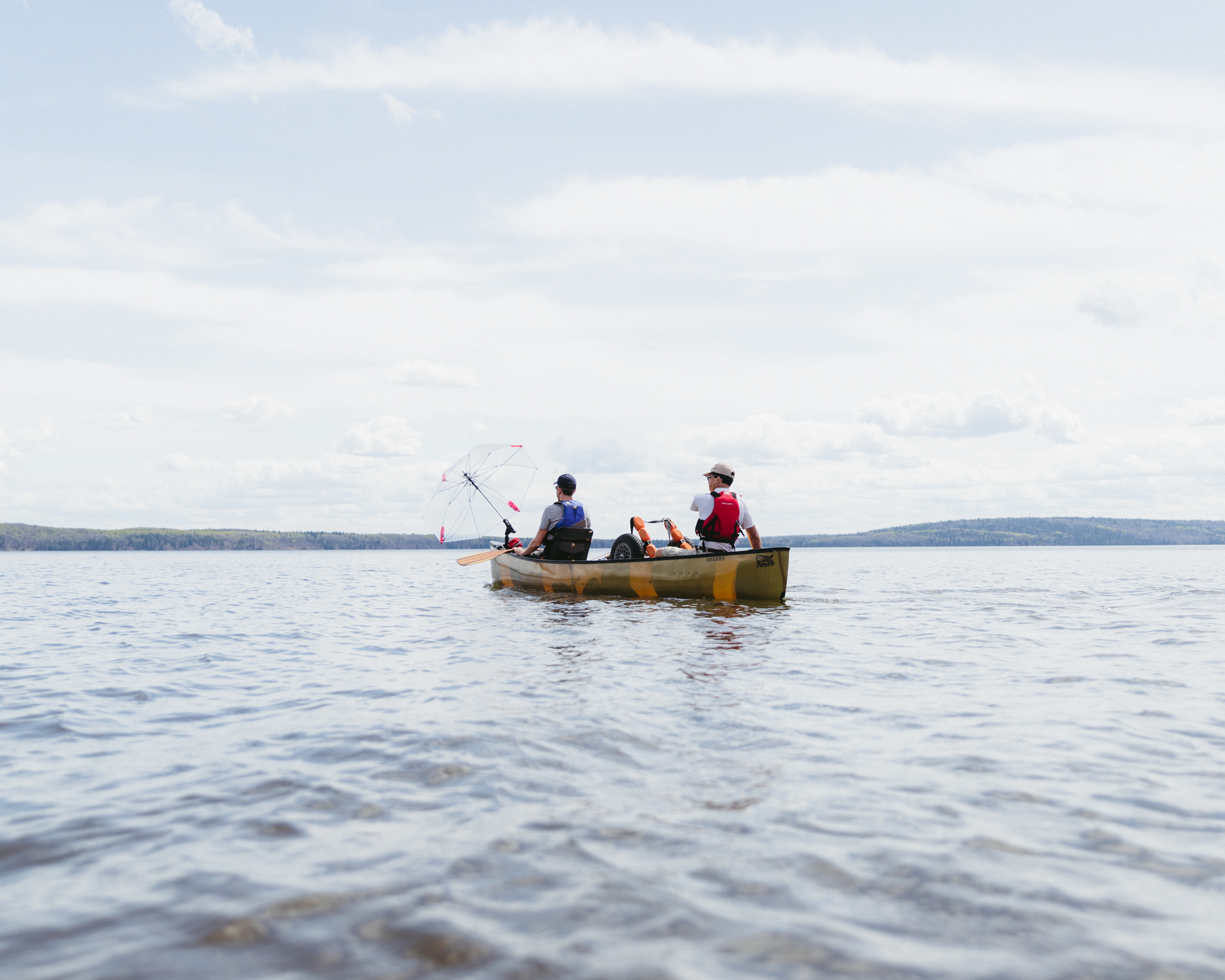
“At the next beach let’s stop so I can stretch my legs,” said Gord from the stern of the canoe.

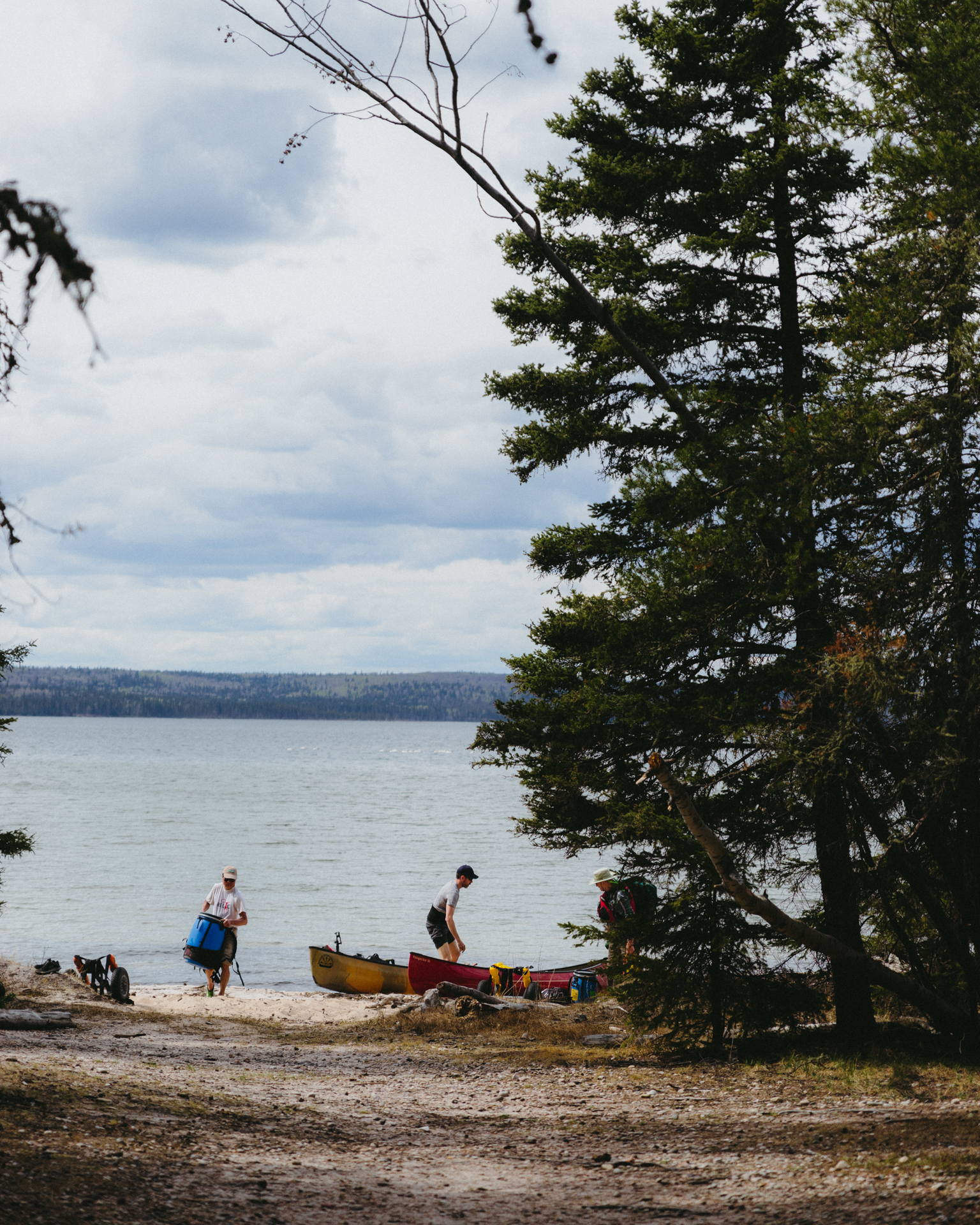
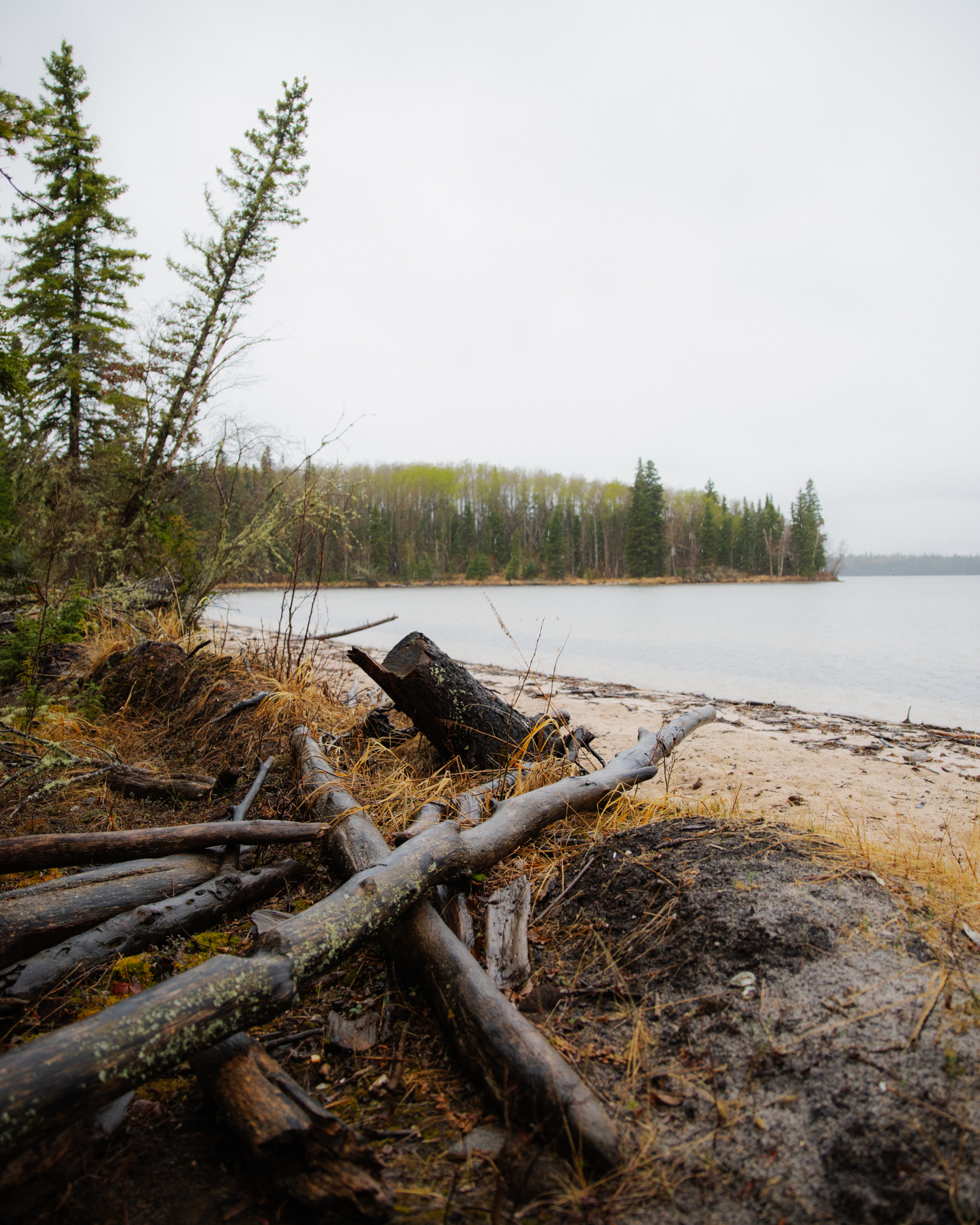
We were paddling along the north shore of Touchwood Lake at the beginning of an ambitious portage trip through the Lakeland Provincial Park and Recreation Area dreamed up and dutifully dubbed the “Death March” by Scott, our fearless leader. Before long we came across a sweeping sandy bay. Gord approved of the spot and we hopped out to stretch. Right behind us in the other canoe, Scott called out,

“Look, a picnic table! Gord, I think you found the campground!”

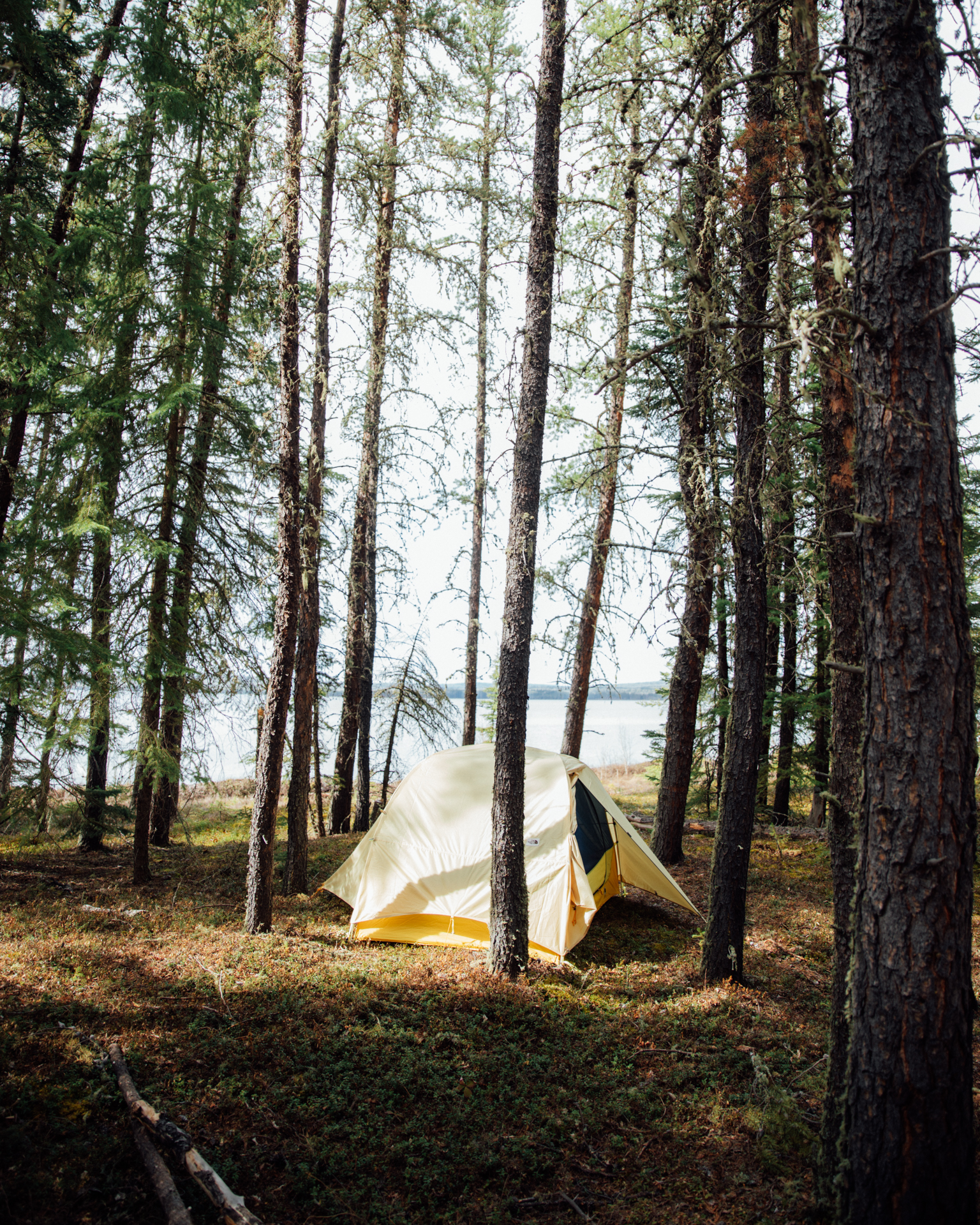
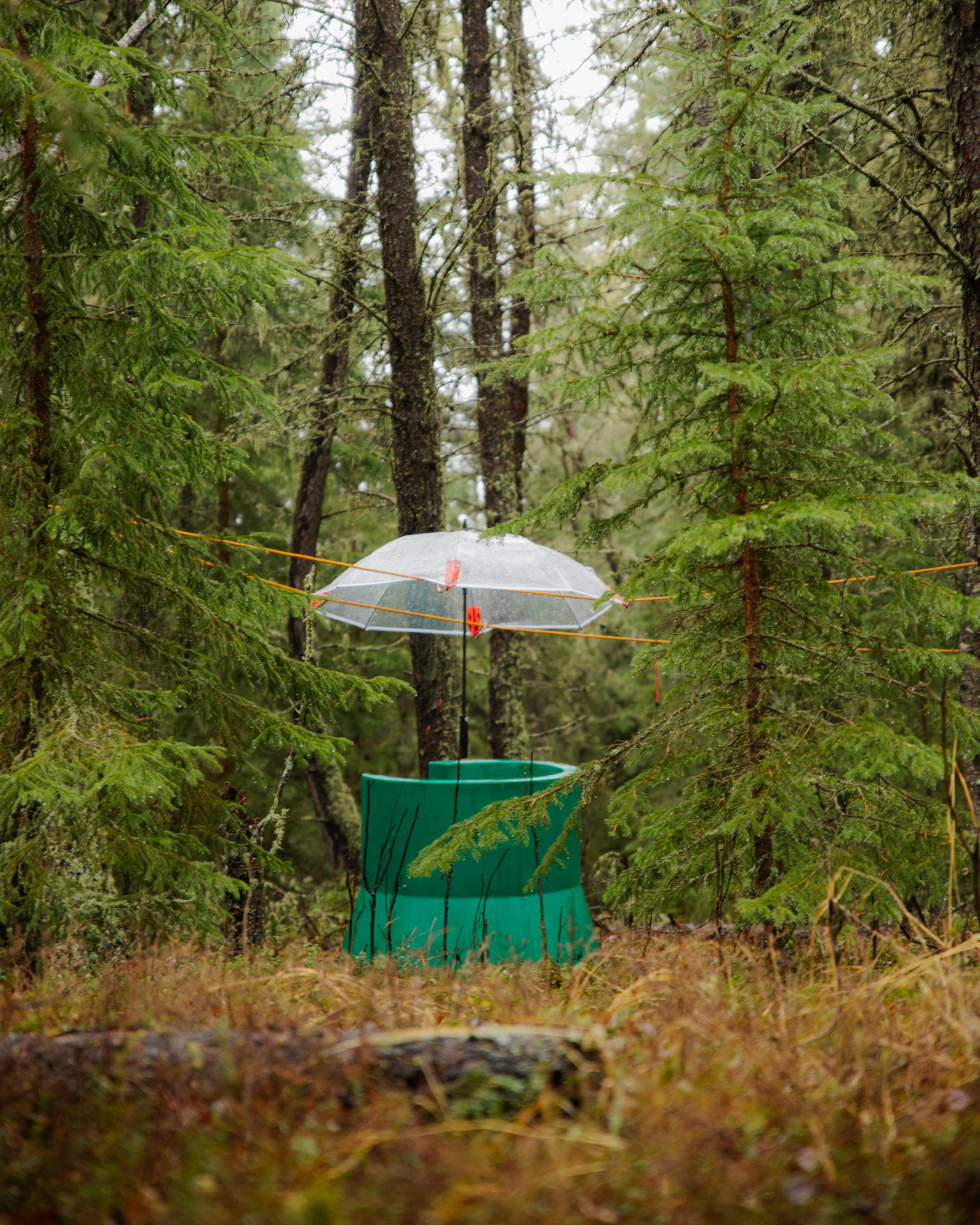
Closer inspection revealed that we had in fact reached our destination, Spencer Crossing, a roomy and beautiful campground with three backcountry campsites complete with bear lockers and a luxurious green throne with a view of the forest. Little did we know that this would be our home for the duration of the trip.

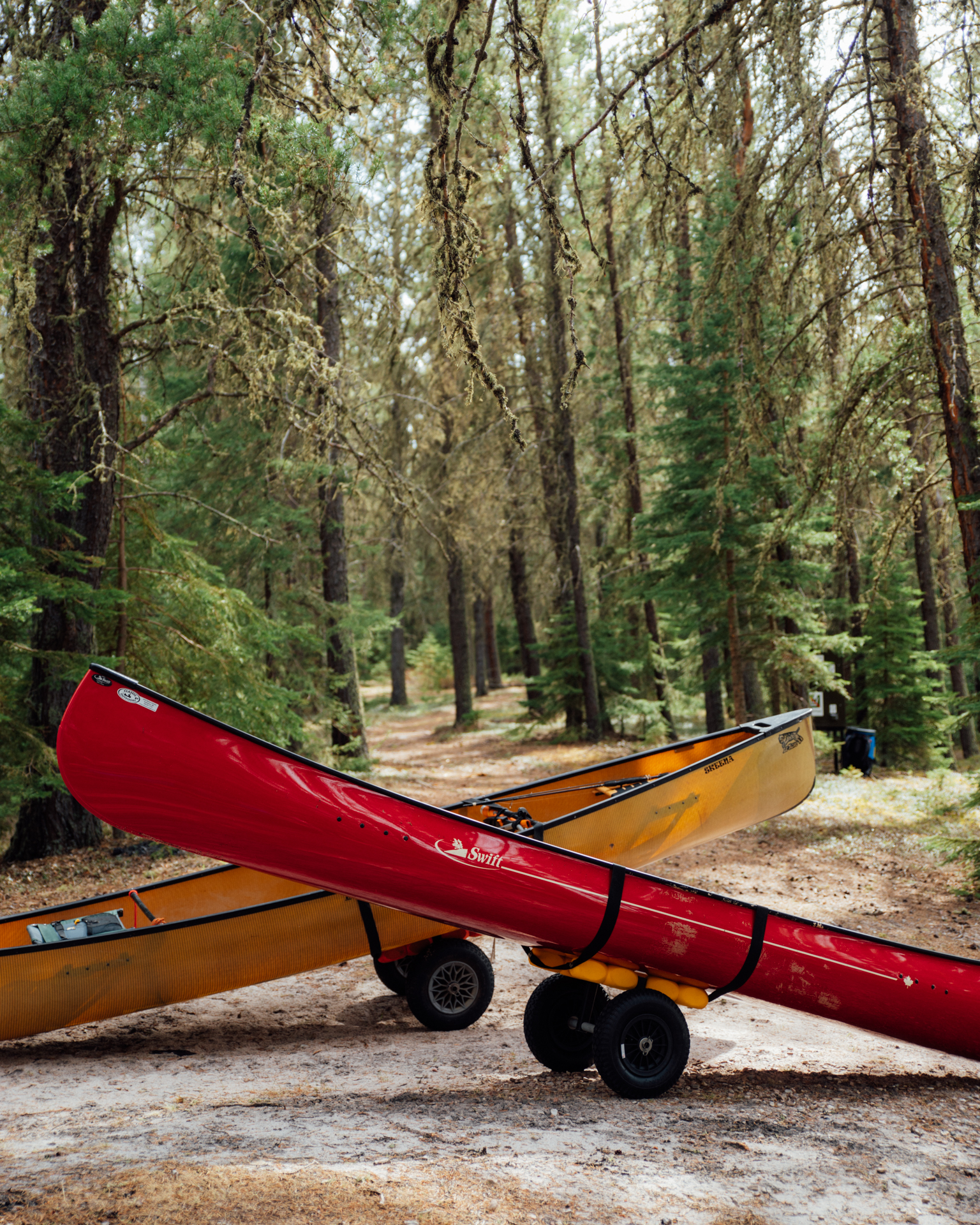
We set up camp and after a quick discussion decided to strap the canoes on wheels and scout out the first portage into Spencer Lake which borders the recreation area and the Cold Lake Weapons Range. The 3.3 km trail is used by snowmobiles and four-wheelers in the winter and looked wide and inviting. Before long, however, it devolved into a mess of muskeg with deep and wide holes of muck which required a coordinated effort of passing the canoe over each little pond while one person jumped ahead each time to catch it. After some time the decision was made to unstrap the wheels and carry the canoes the rest of the way “island-hopping” as we attempted to keep our feet relatively dry on the swampy trail. It wasn’t much longer until we reached the campsite and put in on the west side of Spencer Lake where we enjoyed a much-needed snack and left the canoes for an exploratory paddle the next day. We made it back to camp later in the evening where we enjoyed a lavish meal of perogies and bacon-wrapped asparagus.

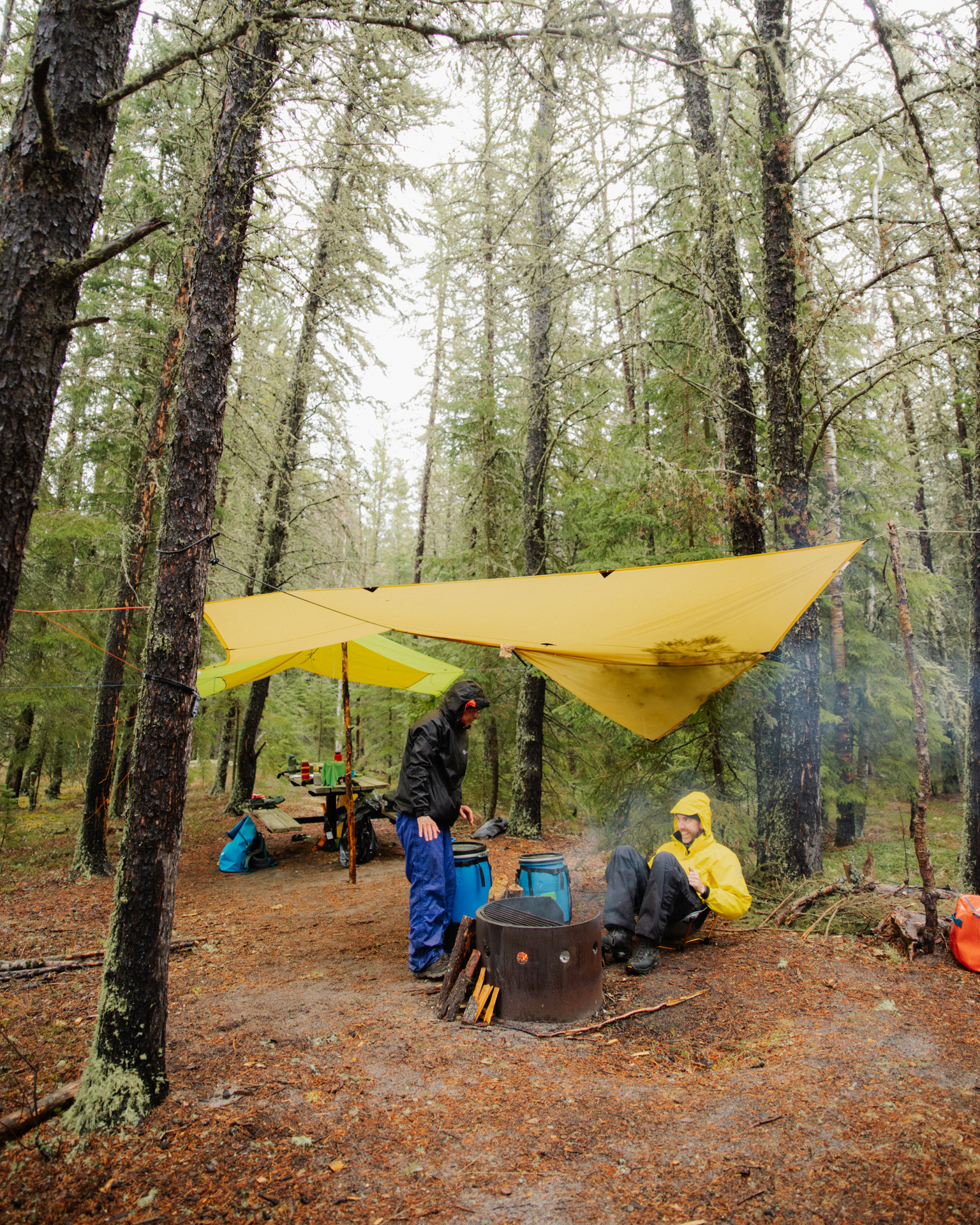
The next day we retraced our steps across the portage and explored the north end of the bay on Spencer Lake before returning to the put-in for lunch. A second paddle out to the South Point was interrupted by strong winds and white caps. We portaged back into Touchwood and enjoyed another hearty meal as the wind continued to pick up and temperatures started to drop. Scott set up a tarp over the picnic table in anticipation of rain in the forecast.

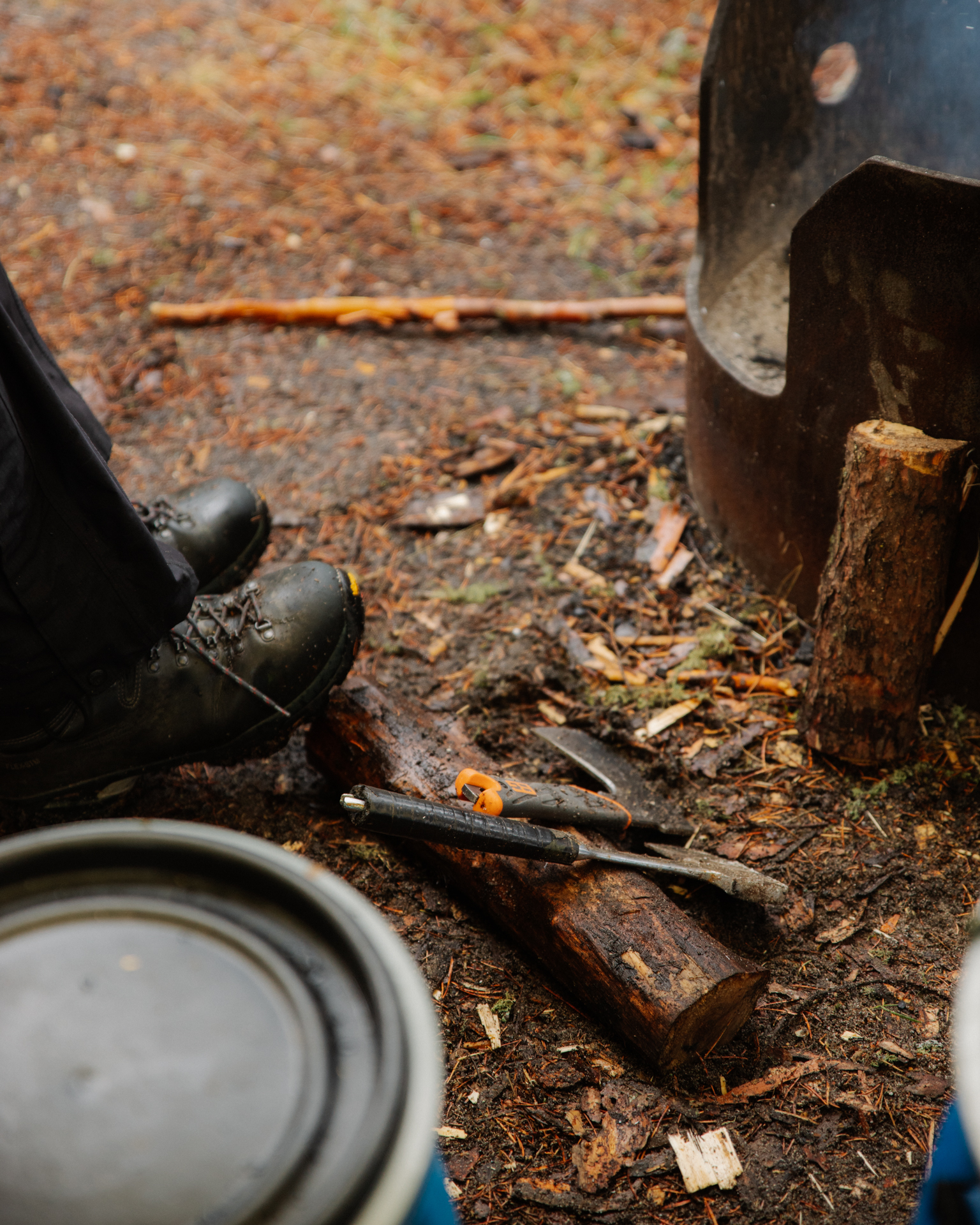
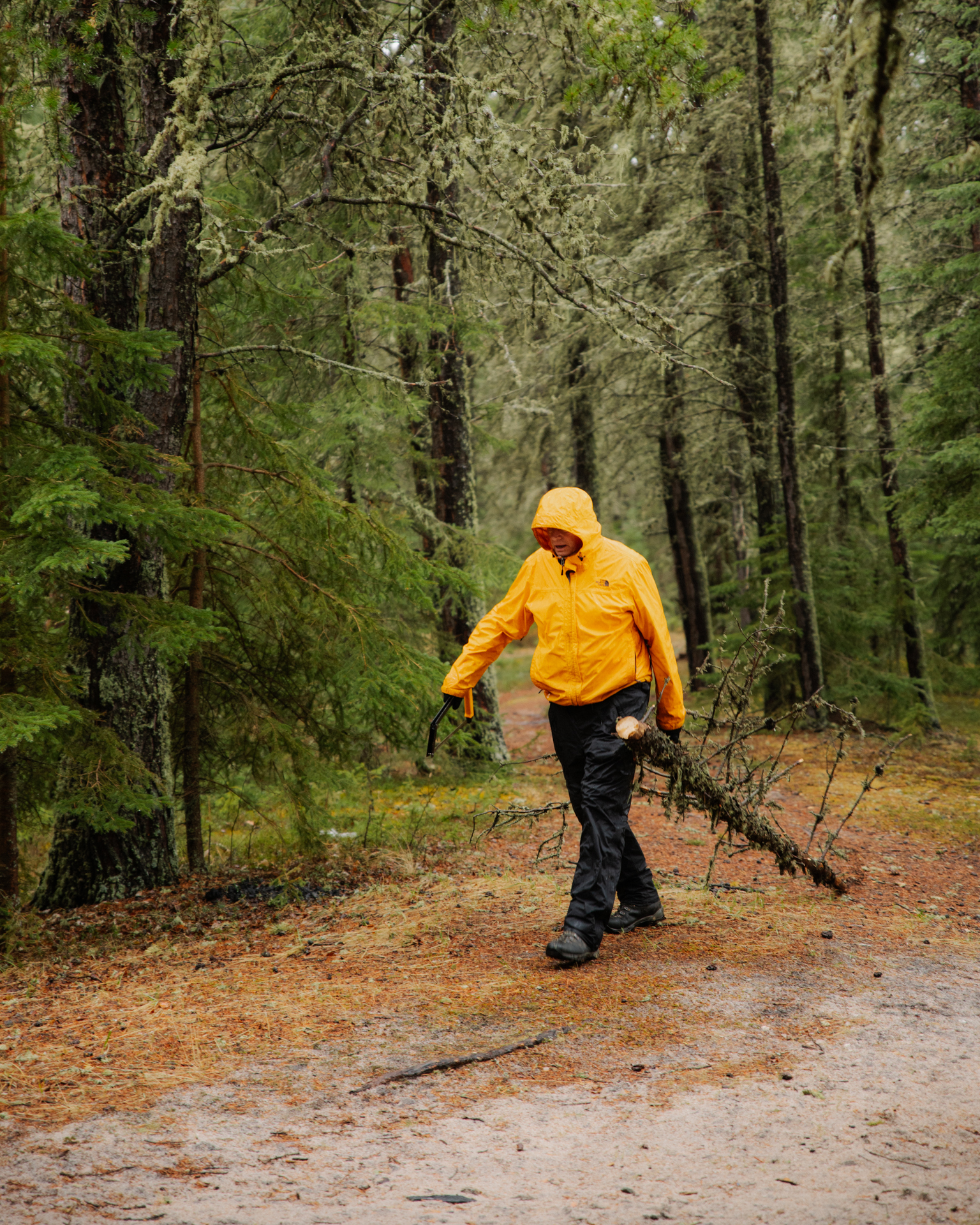
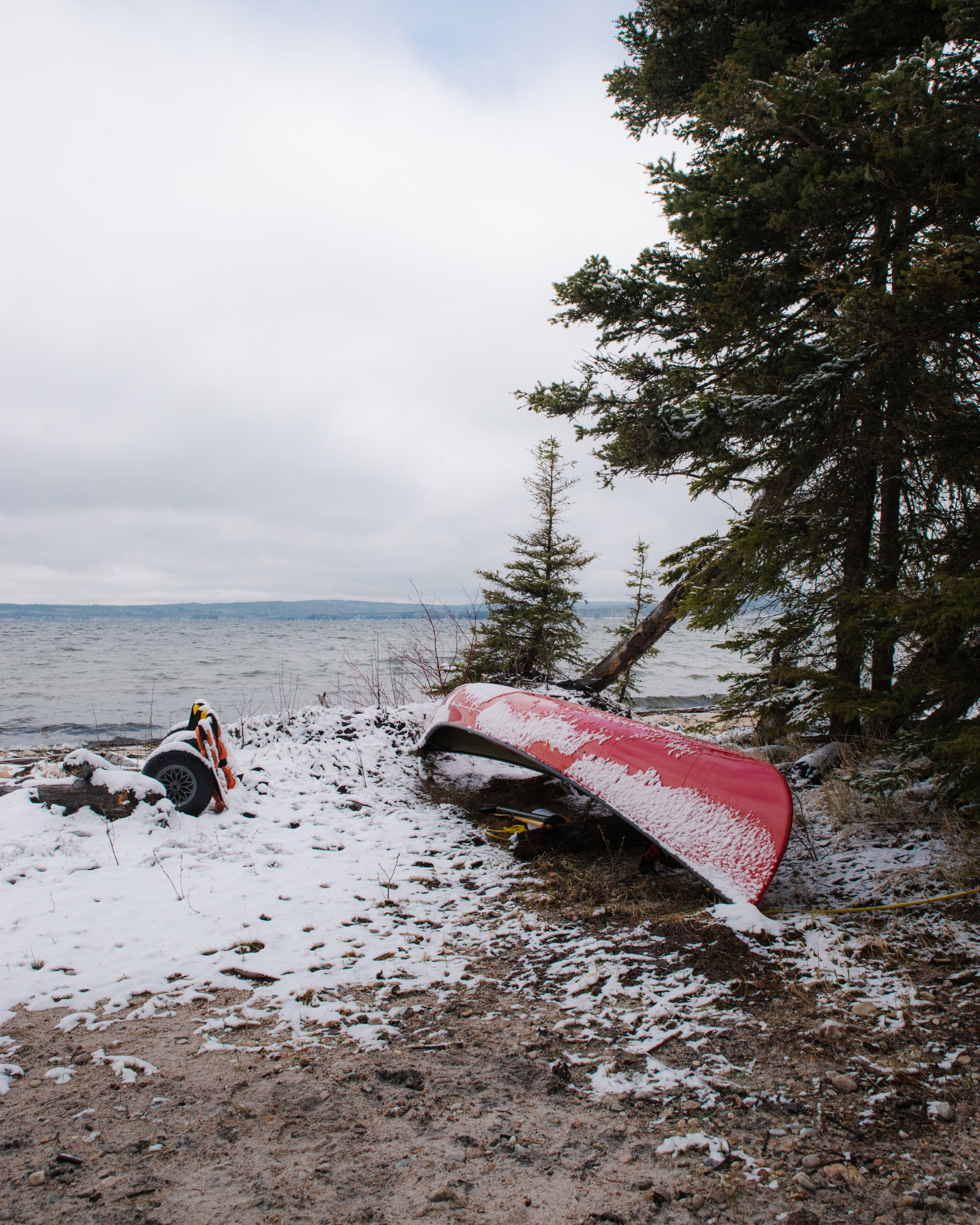
The next morning was chilly and wet as the wind continued to blow across the lake gusting up to 60km/h. We kept busy gathering firewood and making camp more comfortable–mostly just to stay warm. A dark mist settled on the lake. Rain turned to snow as temperatures dropped to below freezing as we crossed into day four of the trip. I was glad for the comfort of my down sleeping bag to keep my toes from going numb under my wool socks.

The morning of day five we were greeted by the sun as the snow started to melt off the trees. After some coffee and oatmeal with all the fixings, we made a short and cold crossing into the wind to Bare Ass point. Then we followed the western shore back to the truck at Touchwood Lake Campground. While we missed out on most of the planned “death march” I welcomed the week in the wilderness—a much-needed break away from the anxieties and stress of life back home. The pandemic had really been starting to mess with my head and a week on a rainy camping trip was just the ticket to some clarity and focus that I hadn’t felt in a long time.

Peace Point to Sweetgrass Station by Canoe

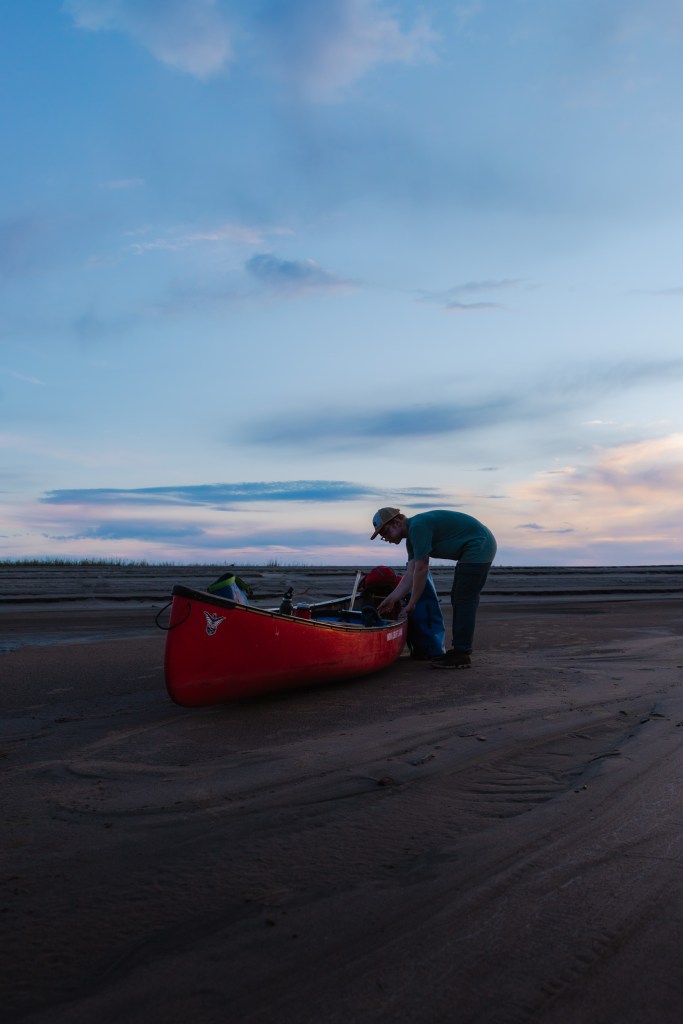
The late August sun was already setting by the time I put my first paddle stroke in the water. A late start from Fort McMurray, two days and 1600 km of dusty northern highway earlier, had put me behind schedule.

It took longer than I thought it would to ferry across the Peace River, its slow and powerful current pushing me downstream as one bank grew larger while the other began to blend into the distant islands and the long gentle curve of the river.

Late start at Peace Point

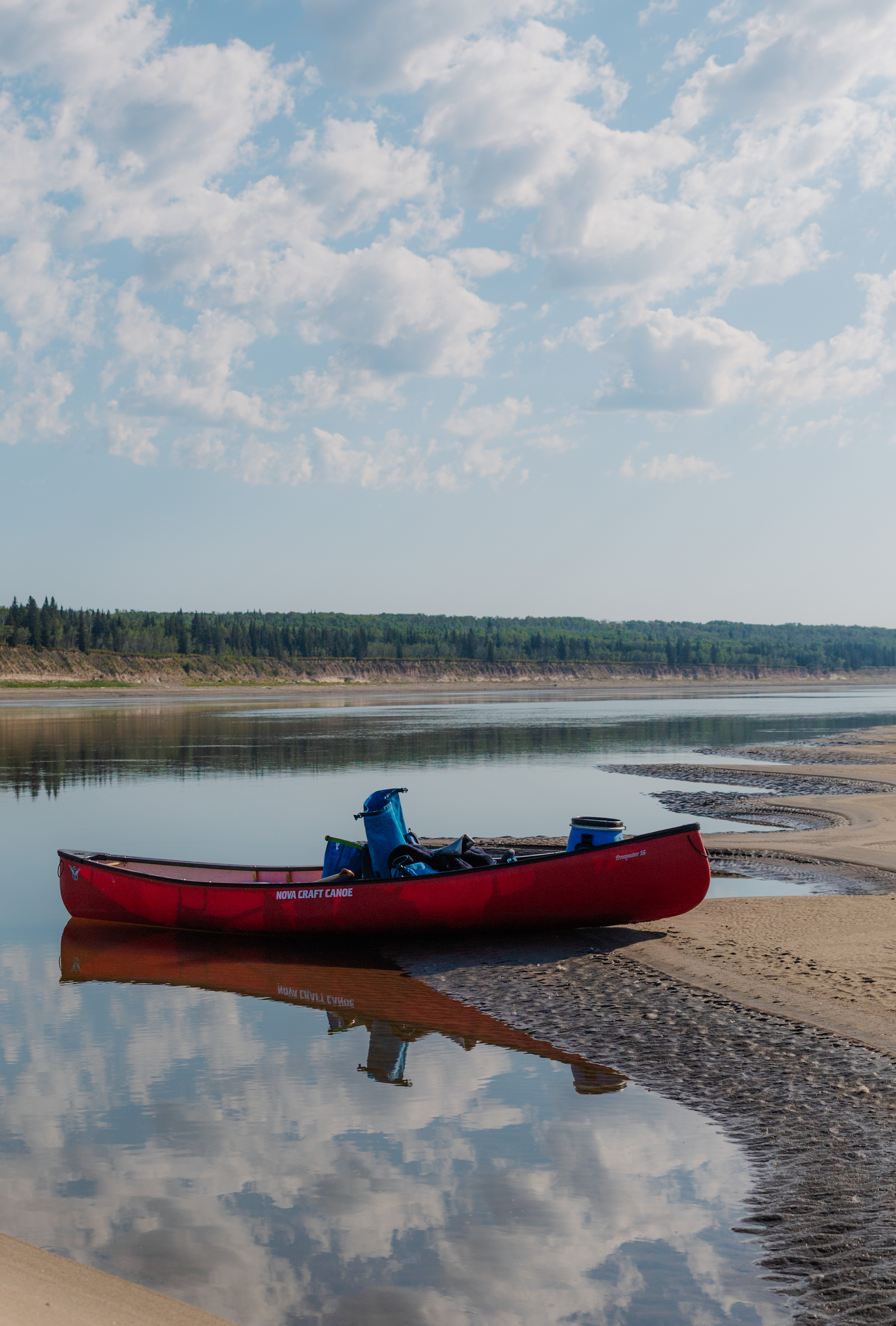
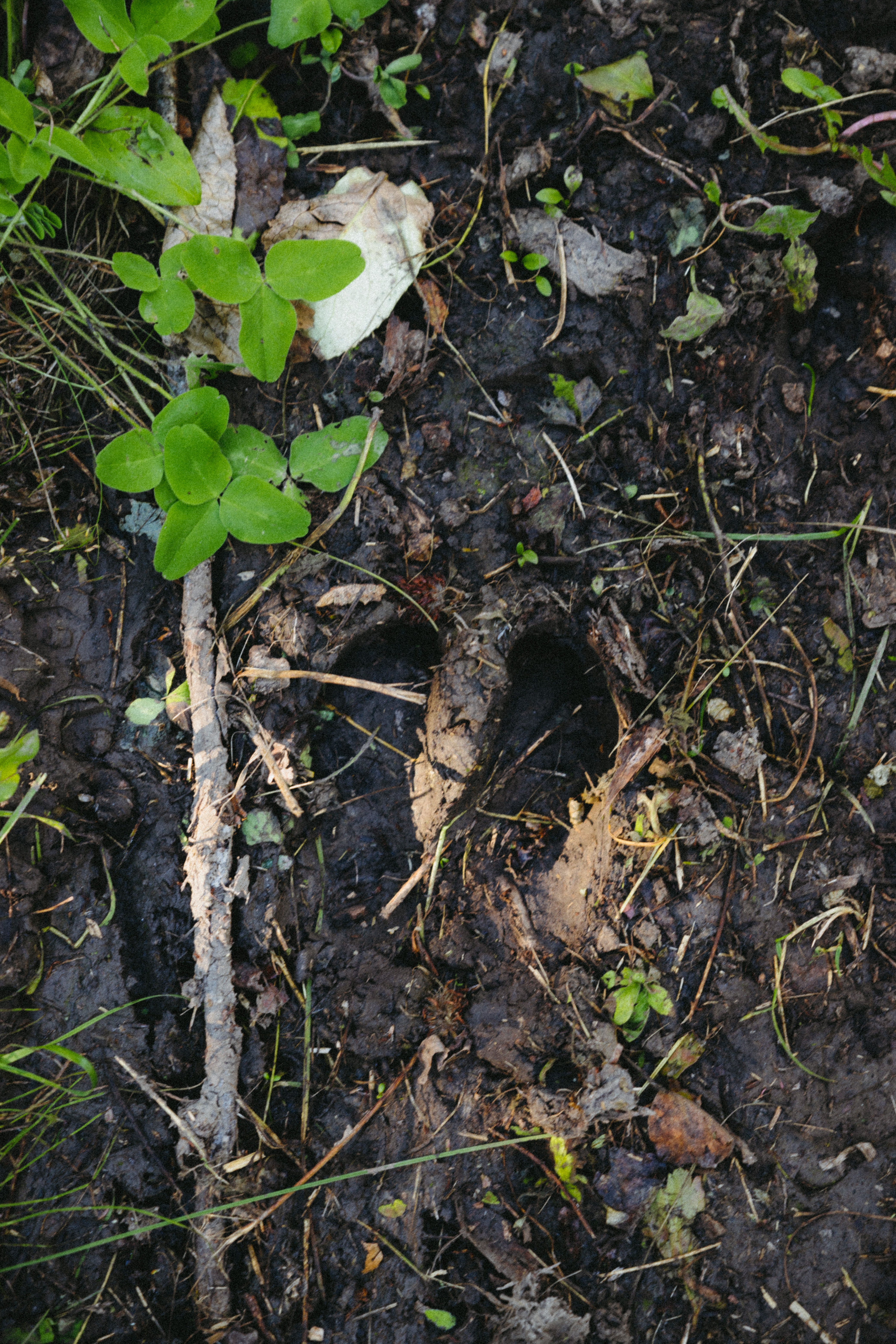
I opt to make camp quickly before the light is gone. The sandy bank is marked by the tracks of tiny creatures, birds, and bears. All at once, the wildness of it all settled in. Here I was, all alone, in Canada’s largest national park.

Day Two

I slept in—I think. I have a phone and a satellite messenger close by in a dry bag for emergencies, but I’m doing my best to stay “unplugged,” so I don’t check the time. (It’s crazy how our perceived need for technology can follow us into the wilderness). With lots of distance to make up ahead of me, I down a quick bowl of granola and an Aeropress coffee for breakfast.

It’s not long before the coffee works its magic, and I pull over to answer “nature’s call.” The sand and mud of the bank show again the evidence of the creatures that call this place home. This time the bear tracks look particularly fresh. After a quick climb up the bank, my eyes are quickly drawn to a black bear foraging in a dried-up channel in the distance. If he is aware of my presence, he doesn’t seem to mind. I watch him for a moment before returning to the canoe—it feels prudent to take care of business a little further upriver.

As I paddle, I pray. There’s something about being out here in the wilderness that strips you of all your pride, your false pretences. It’s just you and the Creator, the Divine, God in the present moment. As I pray, I weep. The heaviness of pandemic living, of the things I have “done and left undone” all carried away into the current. It’s repentance on the river. I’m no expert on the subject, but Celtic mystics talk about an idea called “thin places” where the space between heaven and earth seems to lift. I think this is one of those places.

As the sun, and my energy, begin to fade I am treated to a wide stretch of prime riverside real estate to watch the sunset with tea and dark chocolate in hand.

Before bed I write in my journal, “God, thanks for the gift of today. Please keep the bears away. Amen.”

Day Three

I make it to Sweetgrass Landing by mid-afternoon. The forest is alive with the sound of woodpeckers and squirrels hard at work. I welcome a feast of Annie’s Mac and Cheese sitting at a picnic table sheltered from the long and enduring gaze of the late summer sun. The woodpeckers perform a funny dance in the trees while I read. Tomorrow, I’ll make the day hike into Sweetgrass Station.

Day Four

The trail to Sweetgrass Station is a wide and easygoing fourteen kilometre path that winds through the boreal forest before opening up to Lake Claire and the Peace-Athabasca Delta.

Along the way I spot an eagle, a family of grouse, cranes, ravens, grey jays, squirrels, and best of all, a buffalo ahead of me on the trail. I give him plenty of space and obverse from a distance until he dashes off into the thick bush.

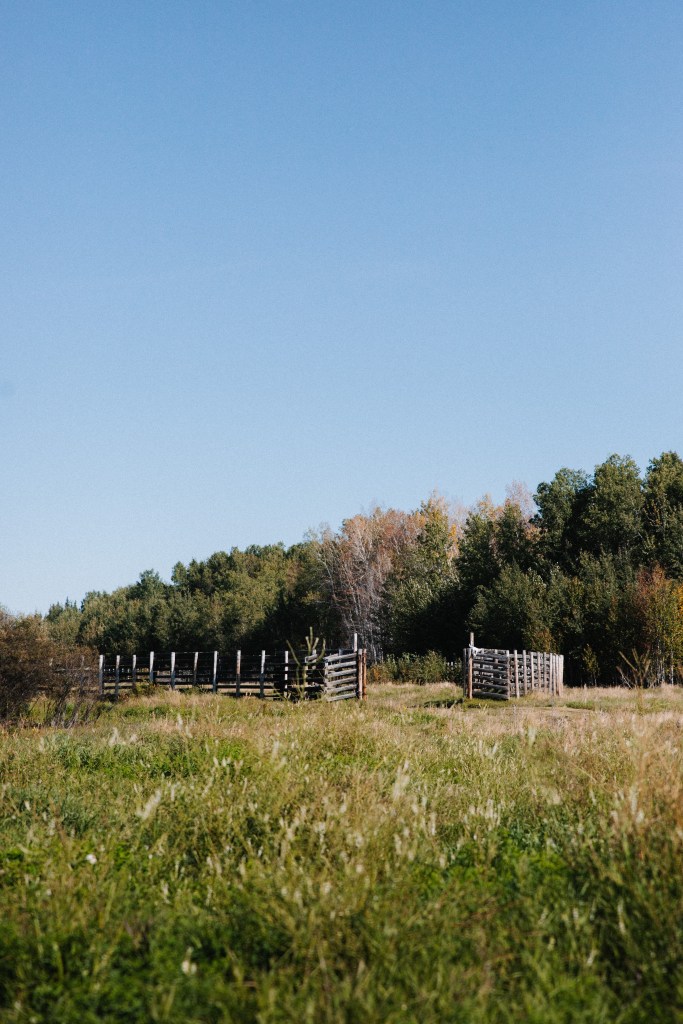
Before long I reach the open meadows and corrals of Sweetgrass Station.

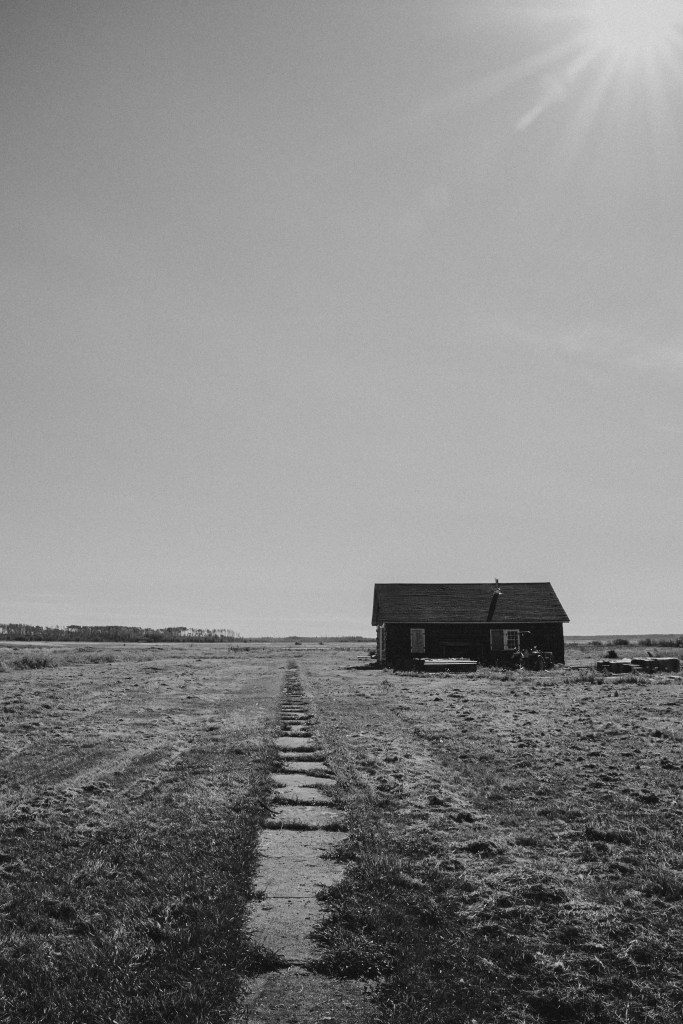
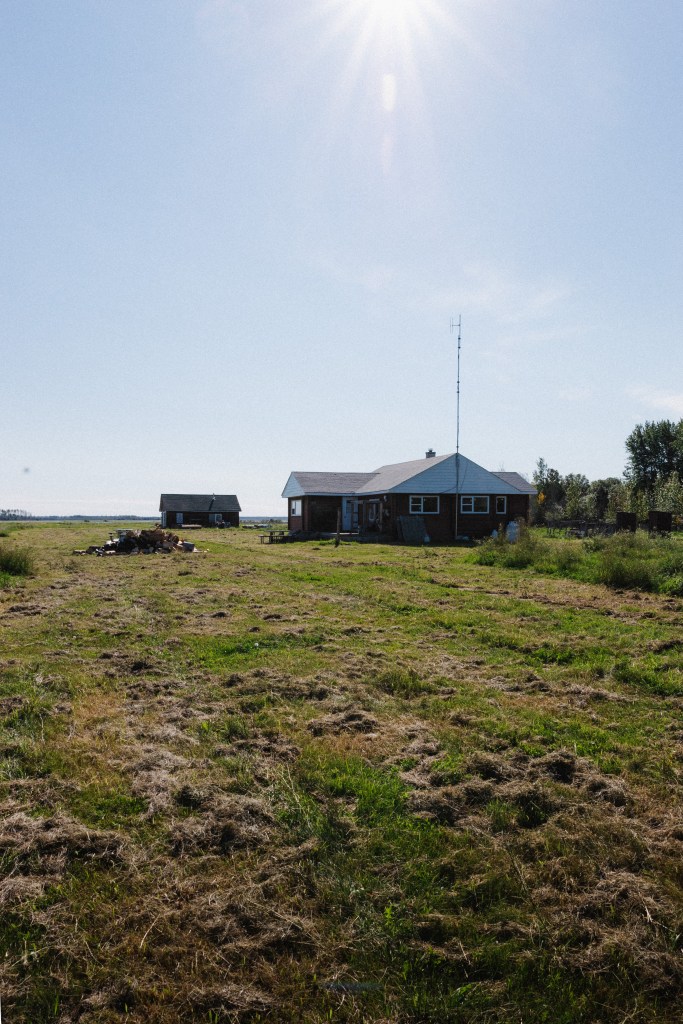
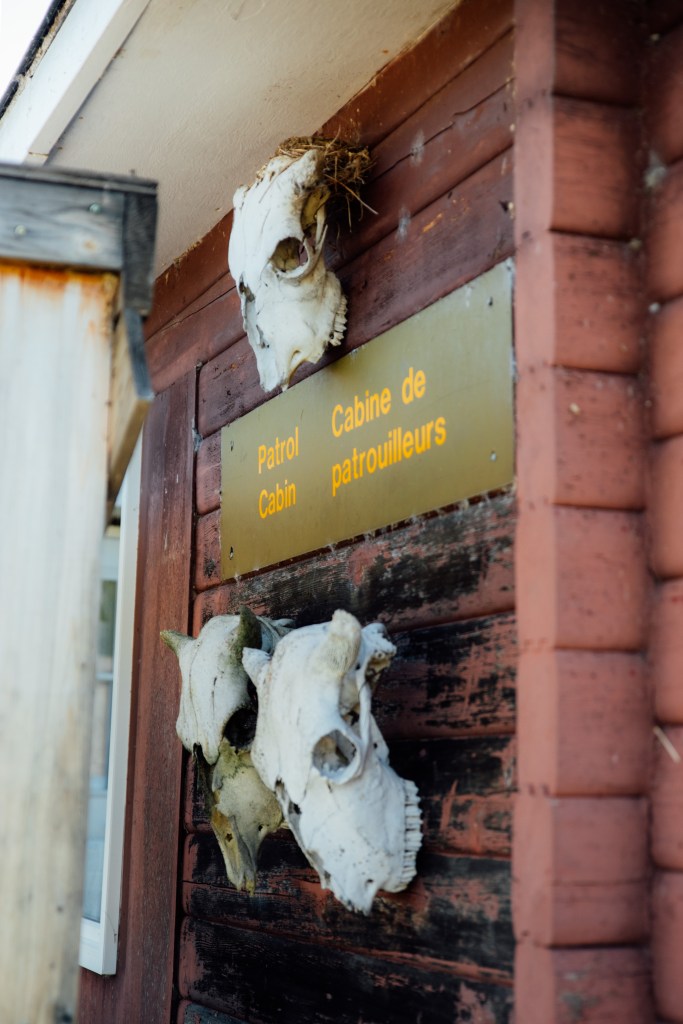
The corrals are a vestige of the troubled and still recent history of Wood Buffalo National Park. The park was created in 1922 to protect the bison and preserve the land and water of the boreal plains. In the years that followed local indigenous peoples were forced off the land and disease was introduced to the wood bison herds by plains bison transported into the park from southern Alberta. An estimated 4000 bison were slaughtered and sold to meat packers, hotels, and restaurants in southern Canada in an attempt to cull the herd and manage the disease. The corrals and cabins at Sweetgrass were built in the 1960s for annual anthrax vaccinations where the buffalo were rounded up by helicopter, and many were trampled or died in shock.

It was never about the bison. We know now that the treatment of Land, Peoples, and mostos was part of a larger governance approach aimed at control and commodification. Logging was carried out on traditional lands in the park and lumber was sold to support exploration and mining in Uranium City. Commercial fishing was permitted on Lake Claire within the park boundary. Profits did not go to the Indigenous communities in the park, where they could have created circular reciprocity with the Land. Some will say this all happened a long time ago, but remember, these were not isolated events.

Chloe Dragon Smith and Robert Grandjambe, To Wood Buffalo National Park, with love

Today the park remains under threat downstream from oil sands and hydroelectric dams.

The health of the Peace-Athabasca Delta has dramatically declined. Indigenous communities see these declines firsthand: the drying of the Delta, the disappearance of culturally important animals and plants, the slow pollution of the fish, waters and air.

Gillian Chow-Fraser, A Brief Indigenous History of Wood Buffalo National Park

As settler people, we have a responsibility to actively pursue reconciliation and to live in right relationship with the land and with the Indigenous people who have sustainably managed it for thousands of years.

I enjoy a lunch of trail mix and Cliff Bars at the cabins with Lake Claire shimmering in the distance. It would be a real treat to stay at the cabin for a few days and get a chance at observing the predator-prey relationship between the wolves and the buffalo, but my plans this time dictate that I must head back.

I wasn’t more than five minutes back down the trail when I felt a piercing pain in my right heel. Upon further inspection, I found that my foot had become covered in blisters and I had rubbed my heel completely raw inside my shoes. I patched myself up the best I could and made my way back to the canoe, albeit a little slower on the return. Loneliness was setting in fast, my first aid kit was understocked, and I worried about keeping my foot from getting infected over the course of many more days of wet and muddy travel up the Peace and Slave rivers, up to Fort Fitzgerald where I had left a bike to shuttle back down the long gravel road through the park to Peace Point. I was frustrated and embarrassed by my mistake, but equally relieved when I got the text on my InReach that there was a good chance I could get an early shuttle at Moose Island the next day, just a few hours up the river.

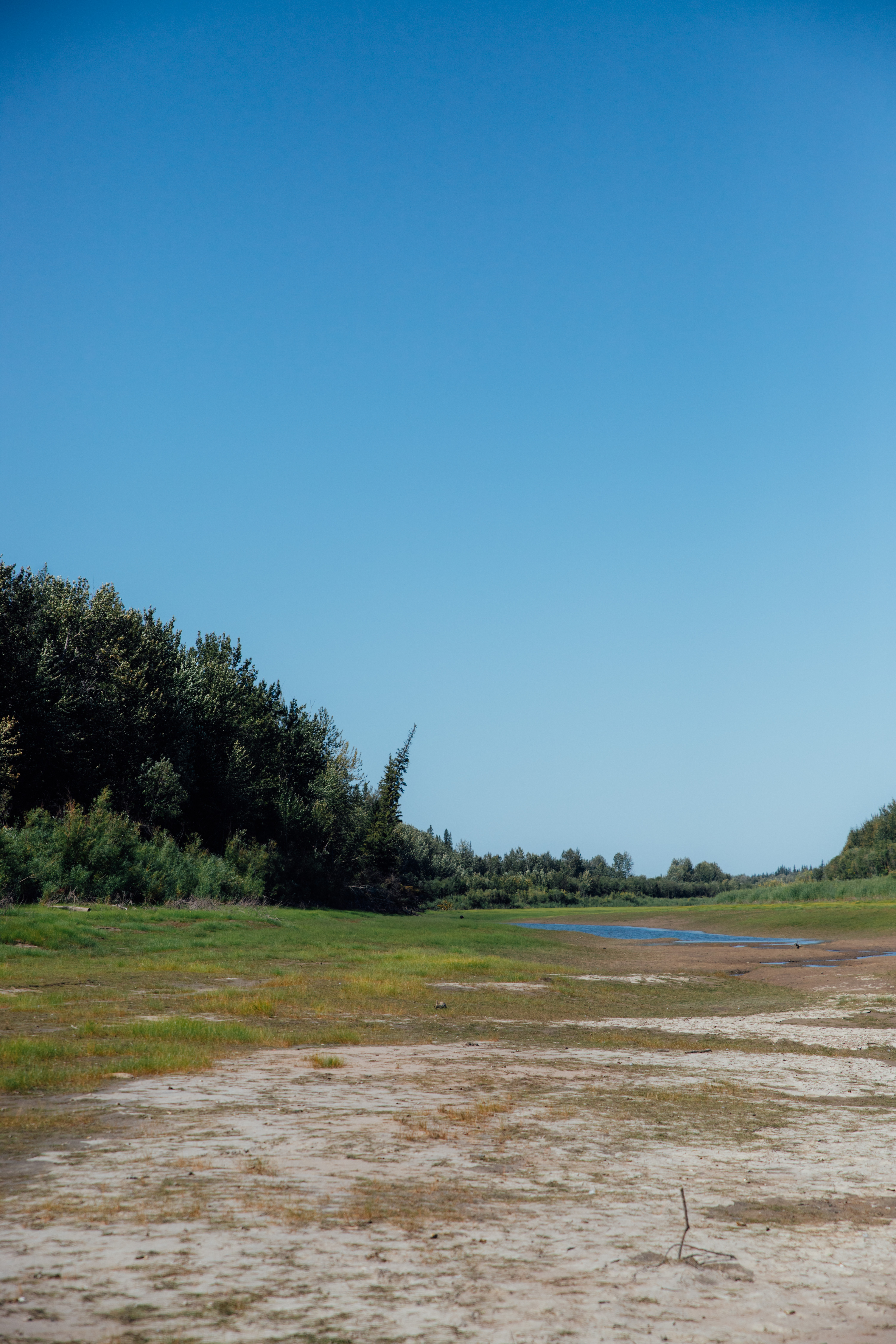
That night I watched as the sky slowly turned shades of faded purple and blue, casting its last light on a sandbar so wide, I couldn’t see the other side from where I made camp for the night.

Day Five

It’s bittersweet waking up on the last morning of a trip. The skies threatened rain, so I packed up and ate quickly before continuing the final short stretch to Moose Island. Upon arrival, I was welcomed into a warm cabin by a couple of trappers, and enjoyed bacon and eggs while listening to stories about the buffalo and the park, its history, and the people who are fighting for its future. I am grateful for their hospitality, and especially their generosity in providing me and my red canoe with a shuttle back to Peace Point.

The trip ended much as it began. Leaving Fort Smith, I cranked the AC in the truck to fight the heat of the late August sun as it set. Ahead of me lay the long dusty highway back to Fort McMurray.

Perhaps sometime you would like to come and visit this wild and wonderful place. You might like to marvel at the prowess and the strength of the buffalo, delight in the strange behaviour of a family of grouse perched in trees like oversized ornaments, or run barefoot across sandbars as wide as the eye can see. Please tread lightly. Learn the rhythm of the water and the language of the trees. And when you drive back down the highway to your home, tell everyone how wonderful it was. We can’t afford to lose it.

Trip Notes

The paddling on this route is not difficult. The biggest obstacles are strong winds (think big lake paddling) and sandbars. The difficulty (and beauty) of this trip is derived by its remoteness and isolation. You must be fully prepared to be self sufficient (food, water, first aid, bugs, bad weather, etc) and leave no trace. Carry bear spray and know how to use it. You should have some experience in backcountry travel. Park use permits are required and can be obtained by contacting the visitor center in Fort Smith, NWT. My permit was the third one issued all season.

The side trip into Sweetgrass Station is a great opportunity to spot local wildlife and enjoy views of the delta. If I was with a group, I would bring portage carts and portage the first four kilometres of the trail. From there you can paddle a creek up to the cabins and spend a few days there. Be sure to plan well ahead and arrange with Parks Canada for use of the cabins.

The gravel road(s) in the park can be rough. Bring a reliable vehicle and make shuttle arrangements far in advance, or better yet, bring two vehicles. If you are coming from Alberta, there are long stretches of remote highway travel. It wouldn’t hurt to bring an extra jerry can.

Further Reading about Wood Buffalo National Park

Albert Ohayon, The Troubled History of the North American Bison | Curator’s Perspective

Chloe Dragon Smith and Robert Grandjambe, To Wood Buffalo National Park, with love

Gillian Chow-Fraser, A Brief Indigenous History of Wood Buffalo National Park

John Sandlos, Northern Bison Sanctuary or Big Ranch? Wood Buffalo National Park

Parks Canada, Sweetgrass: A Prime Backcountry Destination

Sabina Trimble & Peter Fortna with Athabasca Chipewyan First Nation, Honouring Oral Histories: Wood Buffalo National Park and the Dënesųłıné

A Paddling Love Letter to Fort McMurray Wood Buffalo

This land draws you in slowly.

It isn’t vast cityscapes punctuated by flashy architecture. It’s more subtle, more wild. It isn’t bustling subways or crowded downtown corridors. It’s the friendship and community that we find far from home. It isn’t even oil and industry, the first people to live left the stuff in the ground. It’s the rivers and the forests that have provided for so many in so many ways.

This land draws you in slowly, that is until you put a paddle in the water. Suddenly, you’re in love.

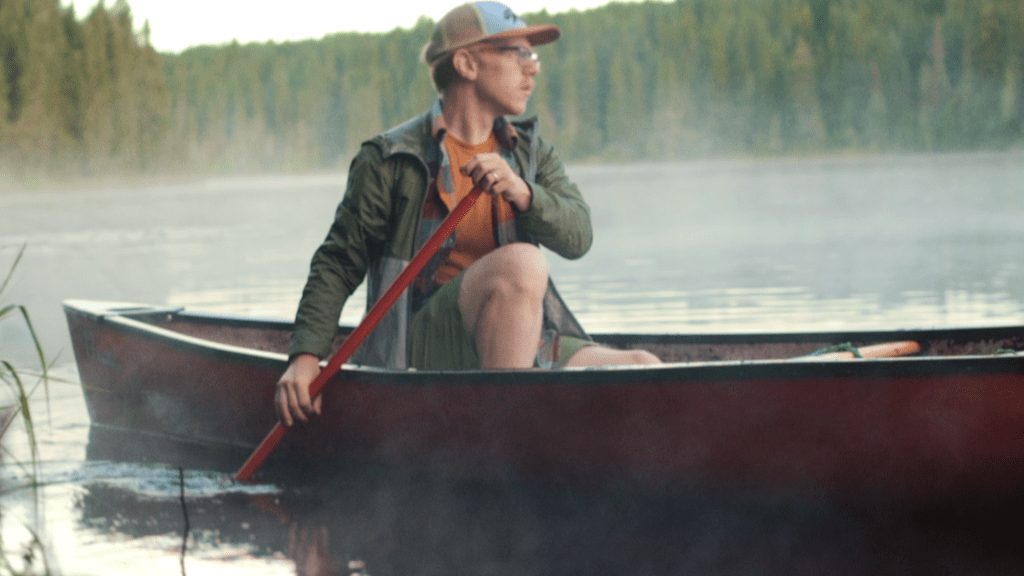
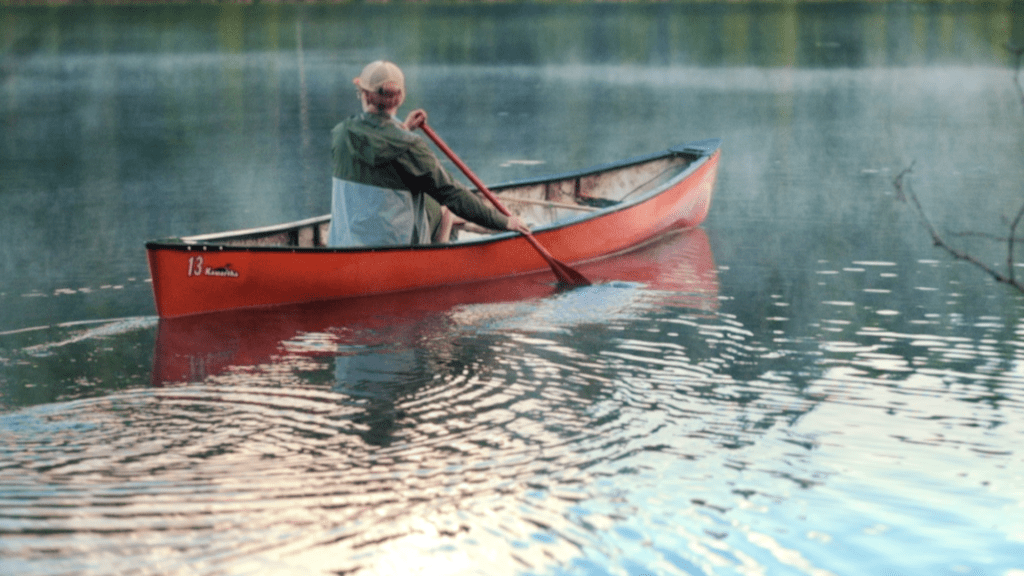
You’re in love with misty mornings on northern lakes and endless sunsets that stretch across the sky. You’re in love with rivers coursing with history so strong you can feel it in the current. You can almost imagine the first peoples hunting and gathering along the banks, the fur traders loading up their canoes with their precious cargo, or even the clamour of the shipyard on the edge of town.

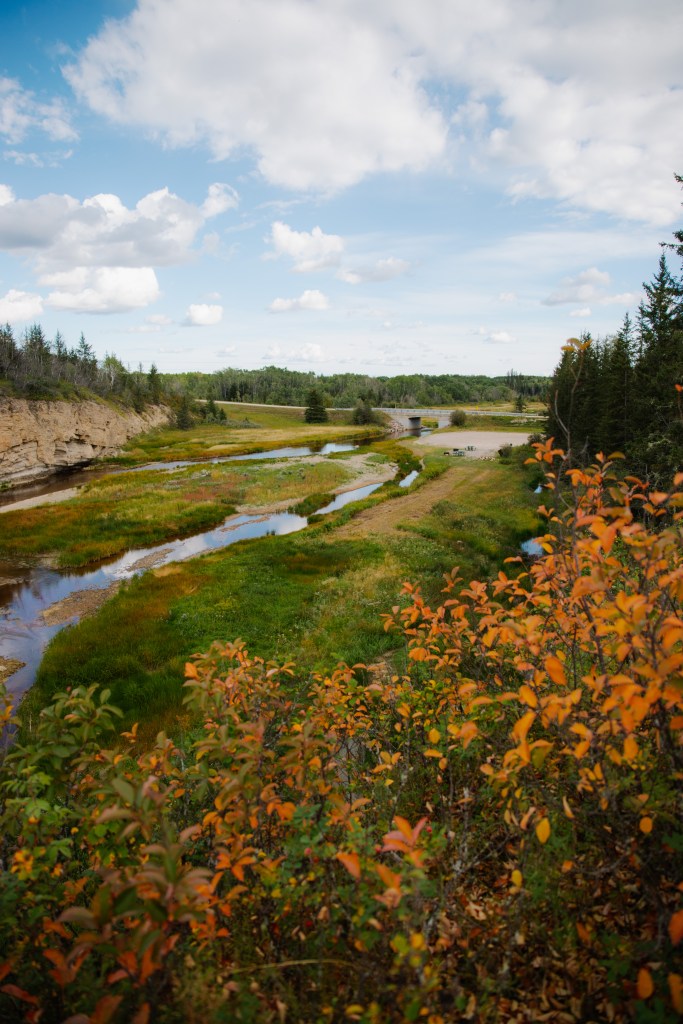
Some people say there’s nothing to do here, and honestly, I just don’t see it. I can drive 40 minutes in any direction from town and be hiking in the middle of the vast boreal forest or paddling a winding river. You might see a few beavers, a whiskey jack, or an eagle overhead. The day will almost surely end laughing with friends over a crackling campfire late into long northern nights.

The thing is, you won’t really know what I’m talking about until you experience it yourself.

This land drew me in slowly.

“Slowly” is a short film about paddling in beautiful Nistawâyâw (Fort McMurray Wood Buffalo). It’s inspired by the work of Canadian filmmaker and canoeist Bill Mason and created by friends Willi Whiston, Genoveve Zepeda, and Matt Lorenz.

Carving a canoe paddle for the first time

One of my winter bucket list items was to carve my own canoe paddle. A quick internet search seemed to indicate that with a marginal degree of patience the project was beginner friendly and likely to be a success. I sourced some rough cut spruce from the local classifieds and armed with a brand new jigsaw, some borrowed hand tools, and enough ambition to be dangerous I set out on a mission to carve my very own canoe paddle.

I’m fairly certain I printed my plans at the wrong scale and ended up just tracing a beaver tail paddle that I knew I liked. Cutting the shape with the jigsaw was a dream, and besides installing the blade backyards in the hand plane the project went off without a hitch. It was a delight to see the paddle emerge from the wood following a few simple directions.

I made a few mistakes here and there and and now with a bit of experience and a copy of Canoe Paddles: A Complete Guide to Making Your Own I’m excited to try my hand at paddle number two.

With the help of my wife Genoveve and my friend Matt we made a little film about the whole thing. The script is written by yours truly and narrated by Harvey Tulk.